WhatsApp Cloud API vs On-Premise, which one an Indian business should run
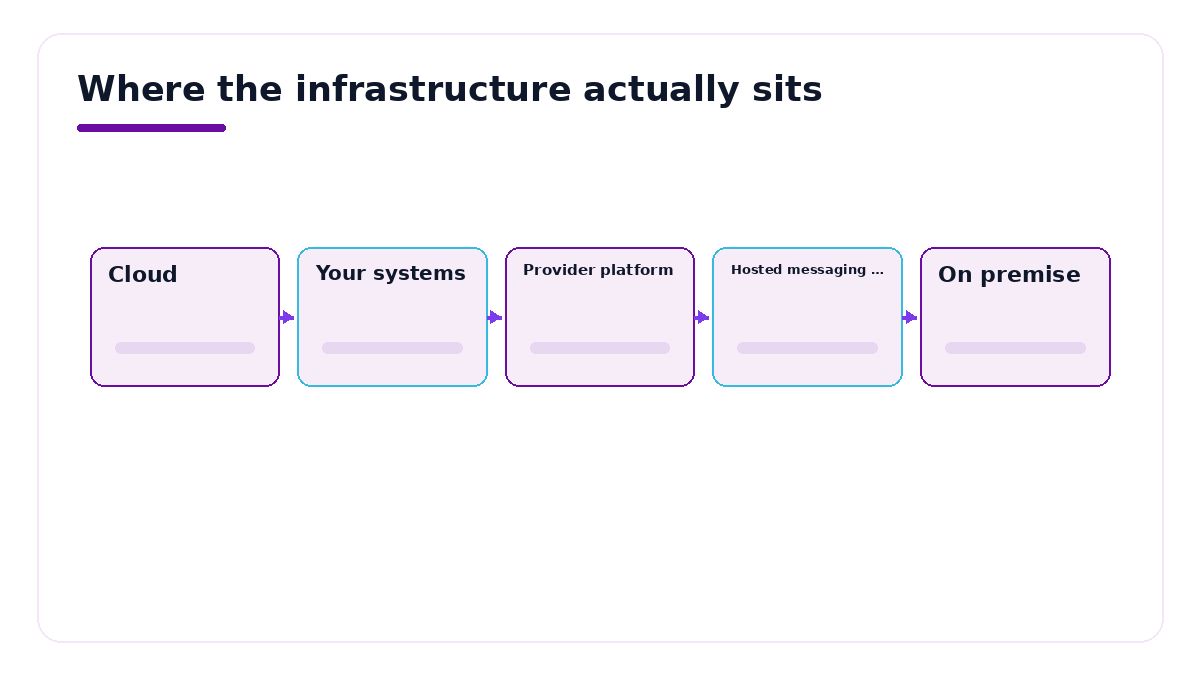
Table of Contents
What the WhatsApp Cloud API actually is
The WhatsApp Cloud API is Meta hosting the messaging infrastructure itself. Your messages are sent from Meta servers, and your provider sits alongside as the layer that gives you an inbox, templates, automation and billing.
The On-Premise API was the older model, where the provider ran a container that held the connection to Meta. Meta has been steering everyone to the hosted model for years, and new accounts start there by default.
For most businesses the decision has already been made upstream. The question worth spending time on is not which to choose but what changes for you now that the WhatsApp Cloud API is where your messages run.
Cloud api vs on premise, the differences that matter
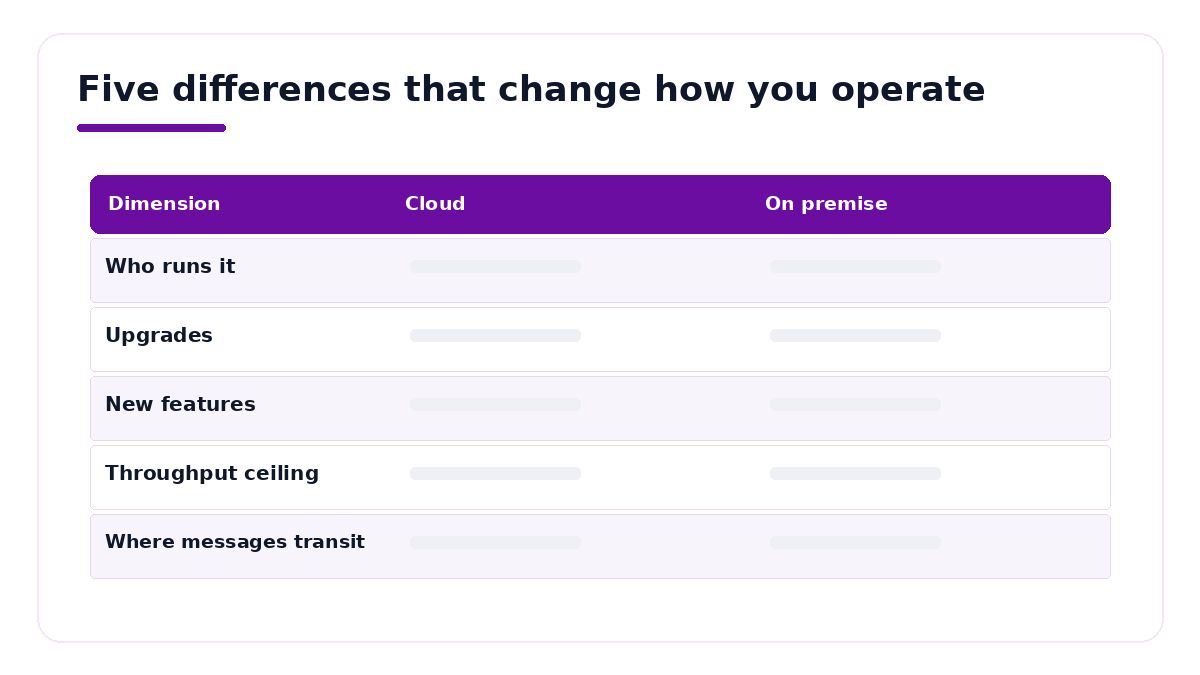
Five differences change how you operate. The rest are implementation detail your provider absorbs.
Dimension | WhatsApp Cloud API | On-Premise API |
|---|---|---|
Who runs the infrastructure | Meta | Your provider or you |
Upgrades | Automatic, on Meta schedule | Scheduled by whoever runs it |
New features | Arrive first | Arrive later, sometimes never |
Throughput ceiling | Set by Meta tier | Also limited by container capacity |
Where messages transit | Meta infrastructure | Provider infrastructure |
The cloud api vs on premise question used to be about control. In practice the control was mostly theoretical, because the container still spoke only to Meta and the message content still passed through Meta either way.
What you genuinely lose with the WhatsApp Cloud API is the ability to pin a version and upgrade on your own timetable. What you gain is that the upgrade is somebody else's problem, and new template types arrive without a provider project.
Does the WhatsApp Cloud API change where your data sits
This is the question Indian compliance teams ask first, and the honest answer has two parts.
Message content passes through Meta infrastructure in both models, so the WhatsApp Cloud API does not introduce a new party to the conversation. What changes is that Meta also holds the transit layer your provider used to run.
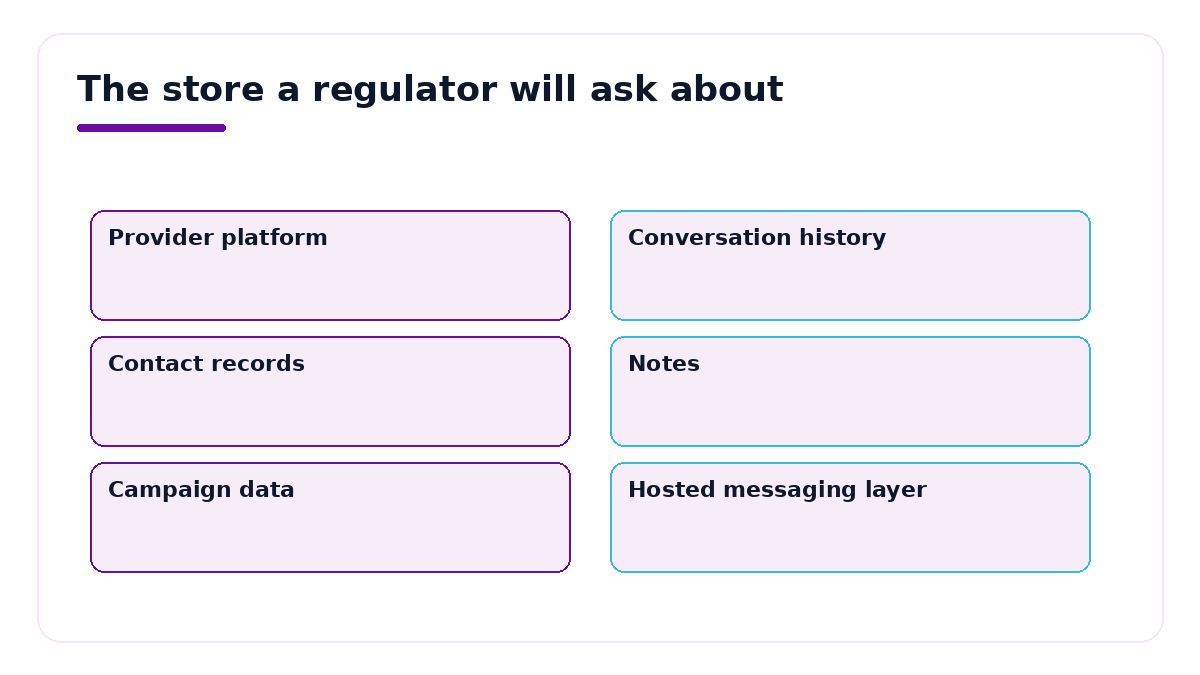
Your conversation history, contact records, notes and campaign data sit in your provider platform, not in the WhatsApp Cloud API. That is the store a regulator will ask about, and it is the one you can actually specify in a contract.
Ask where the provider database sits. Region, and whether it can be pinned
Ask what is retained and for how long. Media, message bodies and metadata separately
Ask who can read it. Named roles, with access logged
Ask what happens on exit. Export format and deletion timetable
None of those four are answered by choosing cloud api vs on premise. They are answered by the provider contract, which is why that is where the attention belongs.
What changes for your developers
Less than most teams expect, because almost nobody integrates against Meta directly. You integrate against your provider, and the provider absorbs the difference.
Where it does show up is in the pace of change. On the WhatsApp Cloud API, Meta ships new message types and template categories continuously, and a provider that keeps up exposes them quickly.
Ask the provider how long it took them to expose the last three features Meta shipped. That single question tells you more about engineering pace than any architecture diagram, and it applies whichever model you are on.
How to migrate to meta cloud api without losing anything
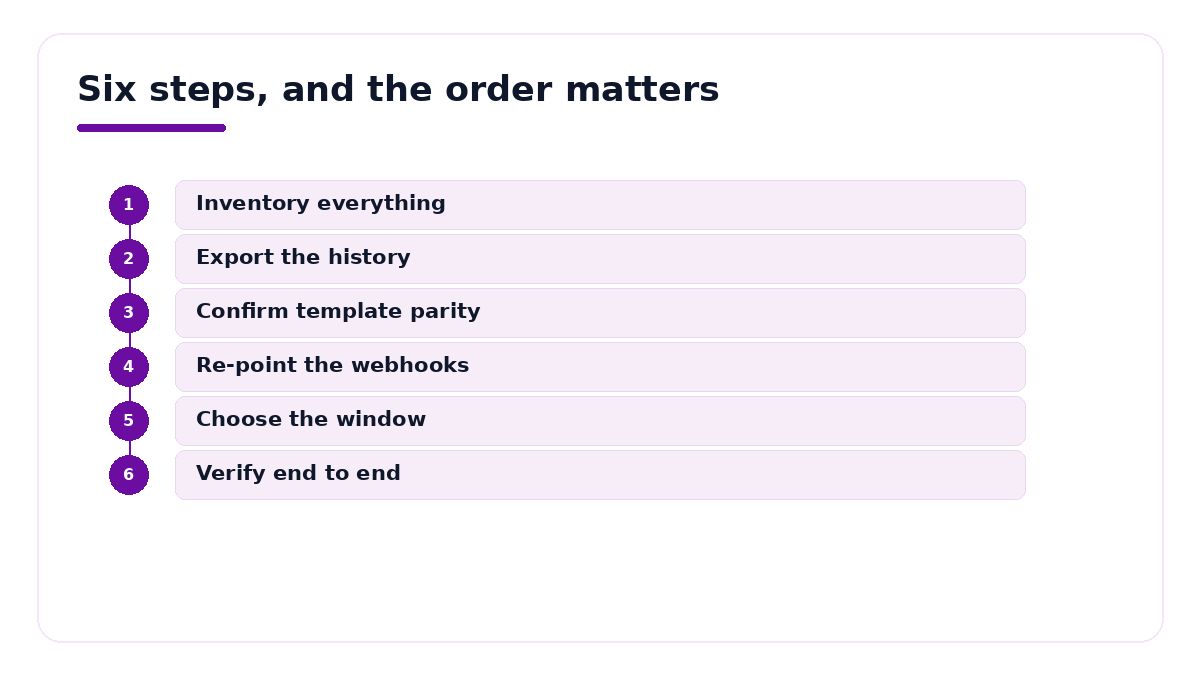
If you are still on a container, the move is a sequence rather than a switch. Run it in this order, because several steps cannot be undone once started.
Inventory first. Every template, every webhook consumer and every integration
Export the conversation history. In a format something other than the platform reads
Confirm template parity. Approved templates do not always carry across unchanged
Re-point webhooks. Every consumer, including internal scripts nobody documented
Choose the window. There is downtime, so pick when it costs least
Verify before cutover. Send a real message through the new path end to end
The step teams skip is the third. A template approved under the old model can need resubmission, and a campaign scheduled against a template that no longer exists fails quietly rather than loudly.
If the migration also involves changing provider, the sequencing is different and more delicate. That case is covered separately in the conversation pricing guide and in our migration material.
What it costs to migrate to meta cloud api
The platform charge is not where the cost sits. Meta bills conversations the same way on both models, so the line that moves is your provider margin and the engineering time to re-point everything.
Budget for four things: provider platform fee, the conversation charges themselves, developer days to migrate integrations, and the campaign pause during the cutover window.
The fourth is usually the largest and the one nobody forecasts. A two-day pause on a channel producing qualified conversations costs more than the migration itself.
Celitix pricing sets out the platform side and WhatsApp API conversation pricing explains how the conversation windows are billed.
Does the WhatsApp Cloud API change DLT or Indian compliance
No. DLT governs SMS, not WhatsApp, and nothing in the cloud api vs on premise choice touches it. What does apply to WhatsApp is Meta policy on opt-in, template categories and quality rating.
Those rules are identical on both models. A business that was compliant on a container is compliant on the WhatsApp Cloud API, and one that was not stays not.
Where the two intersect is fallback. If your flow drops to SMS when WhatsApp fails, that leg still needs DLT registration and the template approvals that come with it.
Meta documents the current platform behaviour on its Cloud API documentation, which is worth re-reading each quarter because the feature set moves faster than the provider documentation around it.
Which one should you actually run
For almost every Indian business starting today, the WhatsApp Cloud API, because it is the default, it gets features first, and the control the alternative offered was largely notional.
The narrow case for staying on a container is a regulated environment with a written requirement that message transit not touch a third-party hosted layer, where that requirement has been tested with the regulator rather than assumed.
If that is you, say so early in a provider conversation, because it changes the shortlist. If it is not, the decision to migrate to meta cloud api is already made and the work is sequencing, not choosing.
The service pages that surround this are WhatsApp Business API, CPaaS solutions and integrations. For setup see the WhatsApp API setup guide and WhatsApp API vs App.
Ongoing operations are covered in WhatsApp quality rating, disabled WhatsApp API account and WhatsApp campaign analytics. Provider selection sits in choosing a CPaaS provider in India.
Where to start with Celitix
Tell us what you run today and we will map the migration as a sequence with the downtime window marked, the templates that need resubmission listed, and the webhook consumers that have to be re-pointed named.
Get your migration mappedCommon questions
Is the WhatsApp Cloud API better than the On-Premise API?
For almost every business starting today, yes, because it is the default, Meta ships new features there first and the control the On-Premise model offered was largely notional. The container still spoke only to Meta.
Does the Cloud API change where my customer data is stored?
Message content passes through Meta infrastructure in both models. Your conversation history, contacts and campaign data sit in your provider platform, and that is the store a regulator will ask about, so specify it in the contract.
Do my approved templates carry across when I migrate?
Not always unchanged. Confirm template parity before cutover, because a campaign scheduled against a template that no longer exists fails quietly rather than loudly. This is the step teams skip most often.
Does the Cloud API affect DLT registration?
No. DLT governs SMS, not WhatsApp. If your flow falls back to SMS when WhatsApp fails, that leg still needs DLT registration and its template approvals, but the WhatsApp side is unaffected by the hosting model.
What does a migration actually cost?
Four lines: the provider platform fee, the conversation charges, developer days to re-point integrations, and the campaign pause during cutover. The pause is usually the largest and the one nobody forecasts.