WhatsApp API conversation pricing, what replaced it and what India pays
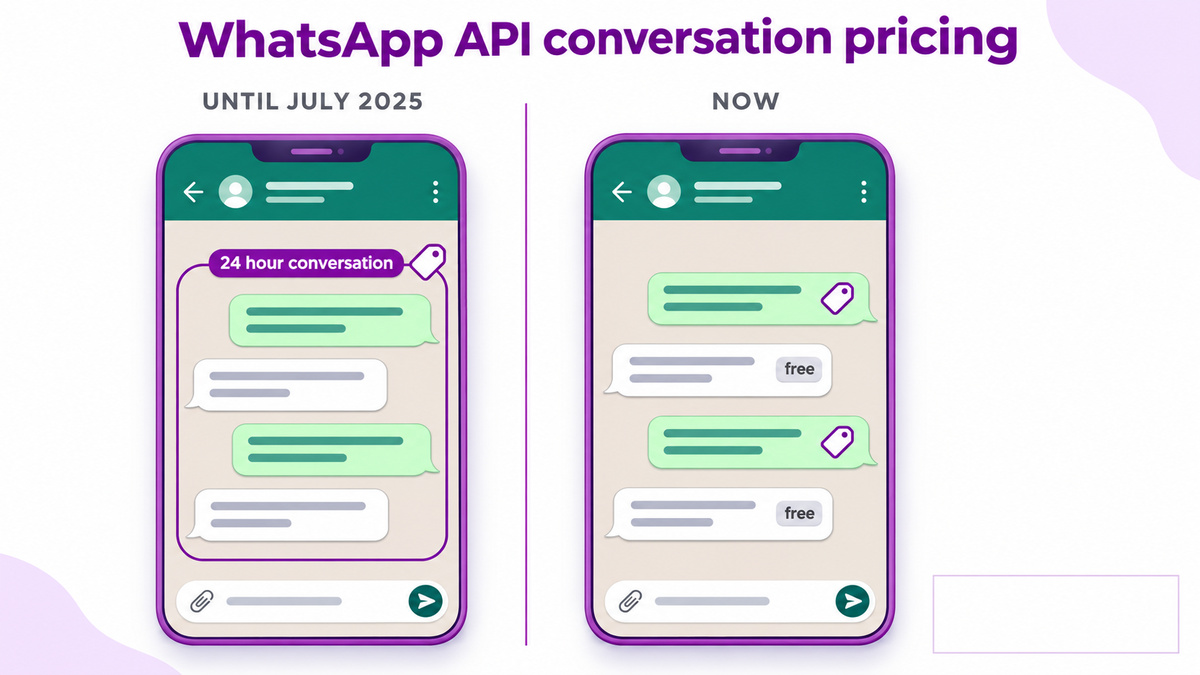
Table of Contents
WhatsApp per message pricing India, the numbers behind WhatsApp API conversation pricing
The WhatsApp service message free tier, and how fast you use it
How to reduce a WhatsApp API conversation pricing bill without reducing reach
The short answer, before anything else
If you are searching for WhatsApp API conversation pricing, the honest first thing to say is that conversations are no longer how Meta bills. That model ended on 1 July 2025, when per message pricing replaced it.
Most guides still describe the old 24 hour conversation window as though it were current. If a provider quotes you a rate per conversation in 2026, they are either behind or rounding something they do not want to explain.
What replaced WhatsApp API conversation pricing
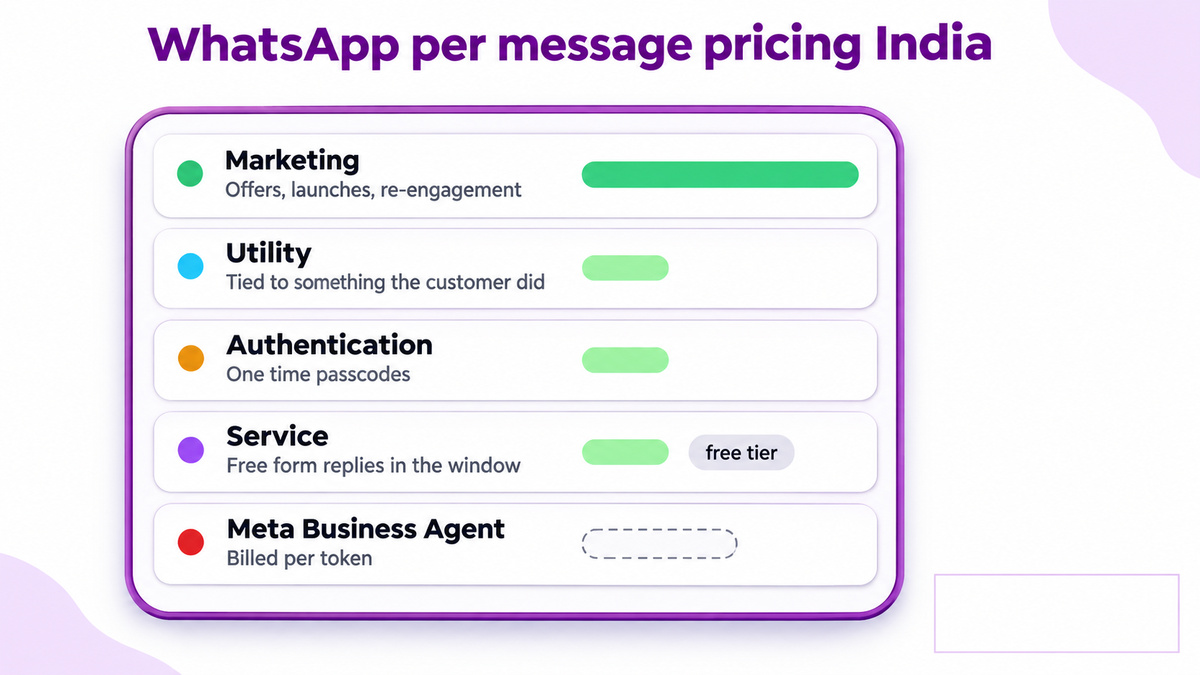
Meta publishes the model and the country rate card on its own platform pricing page, and now charges for each template message it delivers. Incoming messages from customers are free. What you pay depends entirely on which category the message falls into, and the category is decided by the content of the template, not by what you call it.
Category | What it covers | Relative cost |
|---|---|---|
Marketing | Offers, launches, promotions, re-engagement | By far the most expensive |
Utility | Updates tied to something the customer did, such as an order update | A fraction of marketing |
Authentication | One time passcodes and login codes | Same as utility in India |
Service | Free form replies inside the 24 hour window | Free up to a monthly allowance, then utility rate |
Meta Business Agent | Meta's own AI replies | Billed per token, not per message |
That table is the whole of WhatsApp API conversation pricing in 2026. Everything else is arithmetic.
Note what is absent. There is no window, no bundle and no conversation count anywhere in it, which is why WhatsApp API conversation pricing is a phrase without a mechanism behind it any more.
WhatsApp per message pricing India, the numbers behind WhatsApp API conversation pricing
Meta publishes a rate card per country, and its business policy governs what each category may contain. For India, two independent provider sources report the same base rates to four decimal places, which is usually a sign they are quoting Meta's card rather than their own markup.
Category | Reported India base rate, per delivered message |
|---|---|
Marketing | Rs 0.8631 |
Utility | Rs 0.115 |
Authentication | Rs 0.115 |
Service | Rs 0.115, after the free allowance |
Two caveats you should carry when quoting WhatsApp API conversation pricing to anyone. These are base rates before GST, and before whatever your provider adds. And rate cards change, so confirm the current figure before you build a budget on it rather than trusting a blog, this one included.
Why the gap matters more than the rate
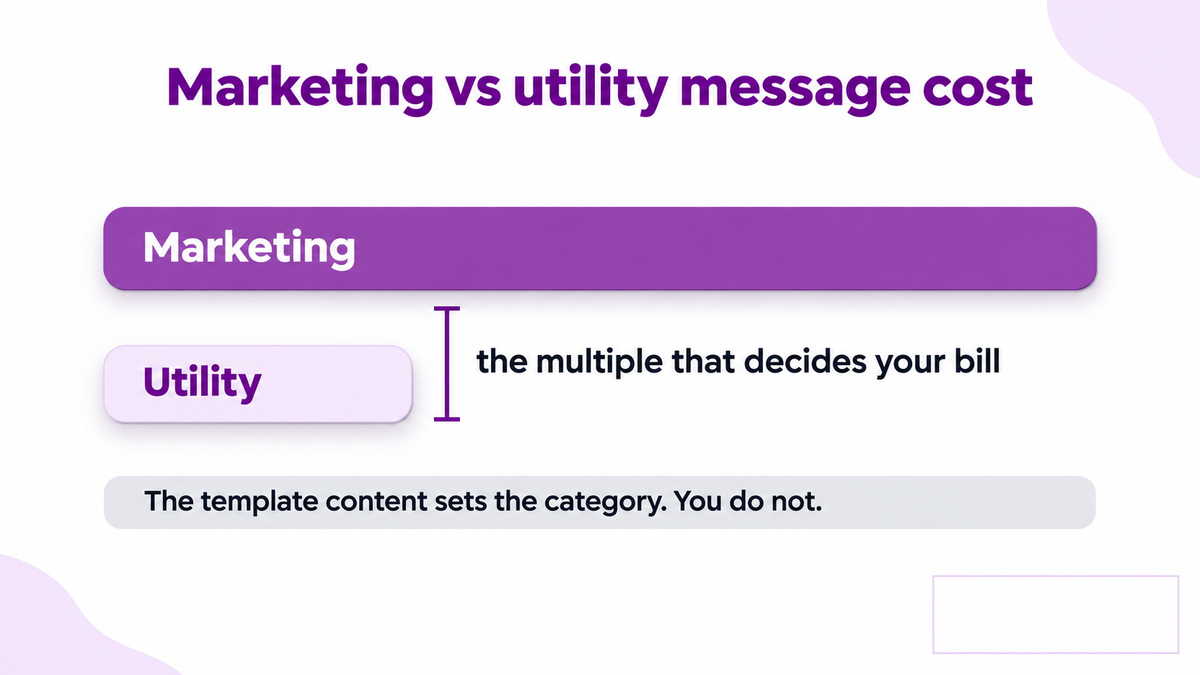
Marketing costs roughly seven and a half times utility in India. That single ratio decides most WhatsApp bills, and it is the reason marketing vs utility message cost is the number worth understanding before any other.
A business sending fifty thousand marketing messages a month is in a different financial situation from one sending fifty thousand utility messages, even though both look identical on a volume report.
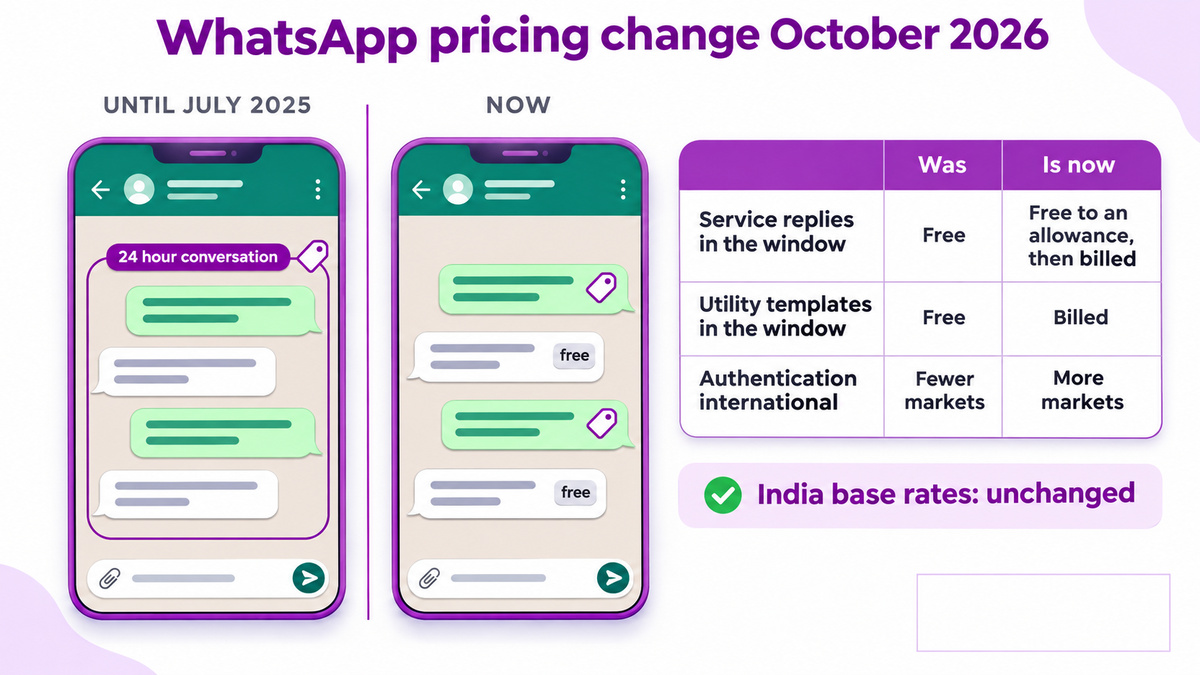
The WhatsApp pricing change October 2026
Meta changed two things on 1 October 2026, applied from midnight in each account's own time zone.
What | Before | Now |
|---|---|---|
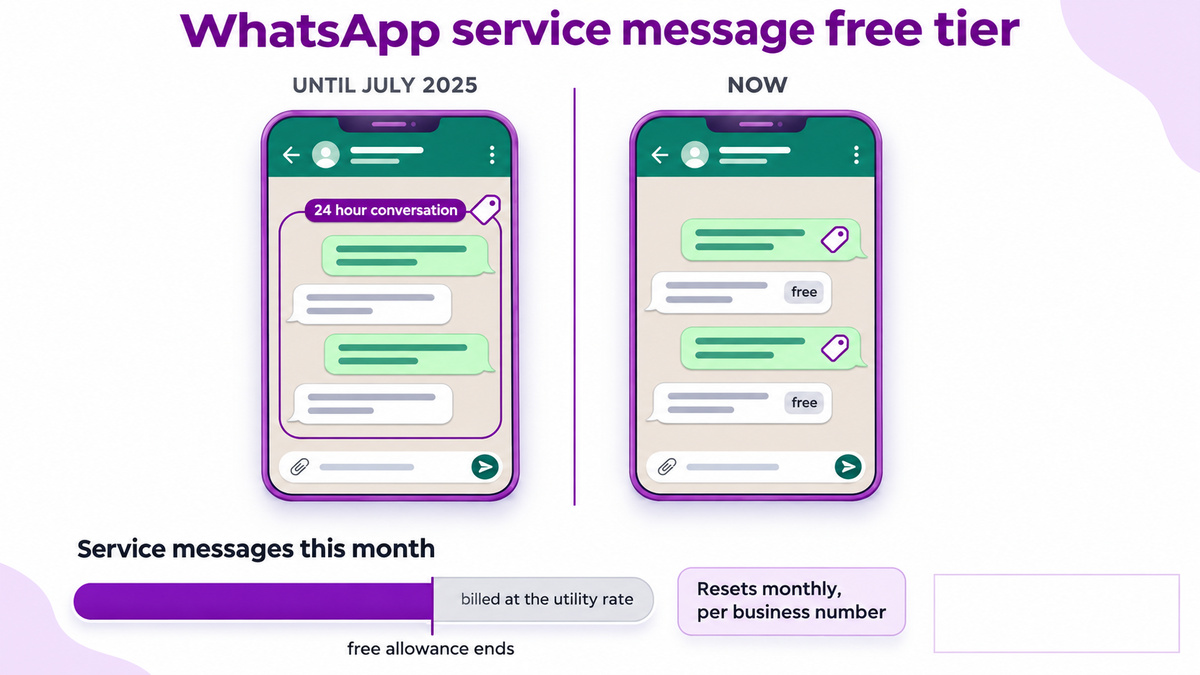
Service replies in the 24 hour window | Free | Free up to a monthly allowance per number, then billed at the utility rate |
Utility templates inside an open window | Free since July 2025 | Billed at the utility rate |
Authentication international | Applied in 9 markets | Applies in up to 18 |
India's base rates were not changed on that date, so WhatsApp API conversation pricing searches that return a rate rise are misreading it. What changed is how many of your messages are billable at all, which for a support heavy business is the larger effect.
The WhatsApp service message free tier, and how fast you use it
Service messages are the free form replies your agents send inside the 24 hour window after a customer writes in. The allowance is per business phone number, per calendar month, and it resets.
A team handling two hundred conversations a day with a few replies each will pass the allowance early in the month. A business sending mostly one way notifications may never touch it.
Work out which you are before deciding whether the change affects you. The answer is in your own inbox, not in a vendor's projection.
How to reduce a WhatsApp API conversation pricing bill without reducing reach
Move what you can from marketing to utility. A genuine order update is utility. Dressing a promotion as an update is not, and Meta recategorises it.
Let customers open the window. A customer who messages first gives you a service window, and the first replies inside it come out of the free allowance.
Stop sending marketing to people who never open it. At the marketing rate, a dead segment is a direct monthly cost, not a neutral one.
Audit your template categories. Templates drift. A utility template that was rewritten with an offer in it is now billed as marketing.
Consider the channel per job. For one way alerts at volume, RCS business messaging India bills per message at a lower rate, and SMS is lower still.
What your provider adds on top
In WhatsApp API conversation pricing, Meta's rate is the floor, not the price. Providers add a platform fee, a per message margin, or both, and the structure varies more than the rate does.
Ask for the breakdown in writing: the Meta pass through rate per category, the provider margin per message, any monthly platform fee, the minimum commitment, and what happens above it. The questions to put to any vendor are set out in our CPaaS provider India guide.
What to ignore in a quote
A single blended rate per message, quoted as though WhatsApp API conversation pricing were one number. It hides the marketing to utility ratio, which is the only number that will actually move your bill.
Common questions
Is WhatsApp API conversation pricing still a thing?
No. Conversation based billing ended on 1 July 2025 and was replaced by per message pricing. The phrase persists because older guides do.
What is the marketing vs utility message cost difference in India?
Marketing is reported at roughly Rs 0.8631 per message and utility at roughly Rs 0.115, so marketing is about seven and a half times utility. Confirm current rates before budgeting.
Do I pay for messages customers send me?
No. Incoming messages are free. You pay for template messages you send, and for service replies once the free allowance is used.
What is the WhatsApp service message free tier?
An allowance of free service replies per business phone number each calendar month. Beyond it, service messages are billed at the utility rate. This started with the WhatsApp pricing change October 2026.
Did Indian rates go up in October 2026?
The base rates were not changed on that date. What changed is which messages are billable, which can raise a bill without any rate moving.
Where to start with Celitix
Celitix passes Meta's category rates through and shows the split by category in reporting, so you can see where the money is going rather than reading one blended number.
Before committing to any provider, including us, our buyer's guide sets out what to get in writing.
Ask Celitix for a category split quote