RCS business messaging India, what it costs and how carrier approval works
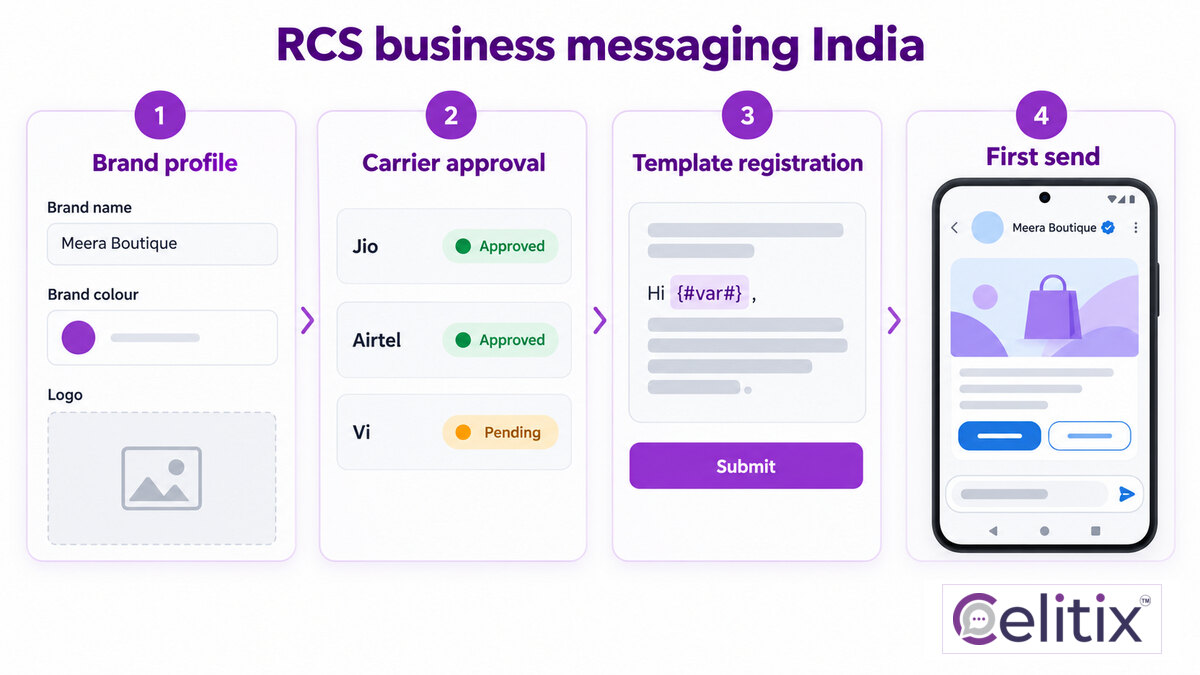
Table of Contents
What this guide covers, and what it does not
This is the commercial and operational guide to RCS business messaging India. It covers what it costs, how carrier approval works, where DLT still applies, and how the economics change once fallback is in the picture.
If you want the technical explanation of the protocol itself, that is a different piece. How RCS messaging works covers the mechanics, and RCS against SMS covers the channel comparison.
How to get RCS verified sender status in India
You cannot send RCS as an unverified brand. Every message carries your name, logo and brand colour in the handset, and that is the entire value of the channel, so carriers gate it.
In India the approval runs through the carriers themselves. Jio, Airtel and Vodafone Idea each maintain their own RCS platform, and your brand profile is registered with each. Google documents the underlying requirements in its brand verification guide.

What the brand profile contains
Brand name exactly as it should appear in the handset
Logo and brand colour, which render in the message header
A description, a website and a contact route
Sample messages showing what you intend to send
The business entity documents, as with any Indian messaging registration
Providers report brand registration across the three carriers taking roughly five to seven working days, with the whole path to first send nearer ten to fourteen. Those are provider onboarding figures rather than a published carrier standard, so treat them as planning numbers.
The part that surprises people in RCS business messaging India is that approval is per carrier. A brand can be live on two carriers and pending on the third, and your reach is whatever is approved on the day.
Where DLT still applies to RCS business messaging India
RCS rides Google's rails, so a reasonable assumption is that Indian template rules do not apply. That assumption is wrong.
Indian carriers still require template registration through the DLT system for RCS traffic, in the same way they do for SMS, under the TRAI framework. If you already hold a DLT entity registration, that work carries over. If you do not, it has to happen first.
The full process is set out in our guide to the DLT registration process India. The short version is that entity registration gates everything, costs around Rs 5,900 at the major operators, and takes a few working days.
RCS business messaging cost India, and why nobody quotes one number
RCS in India is billed per message, not per conversation. That single fact drives most of the cost difference against WhatsApp.
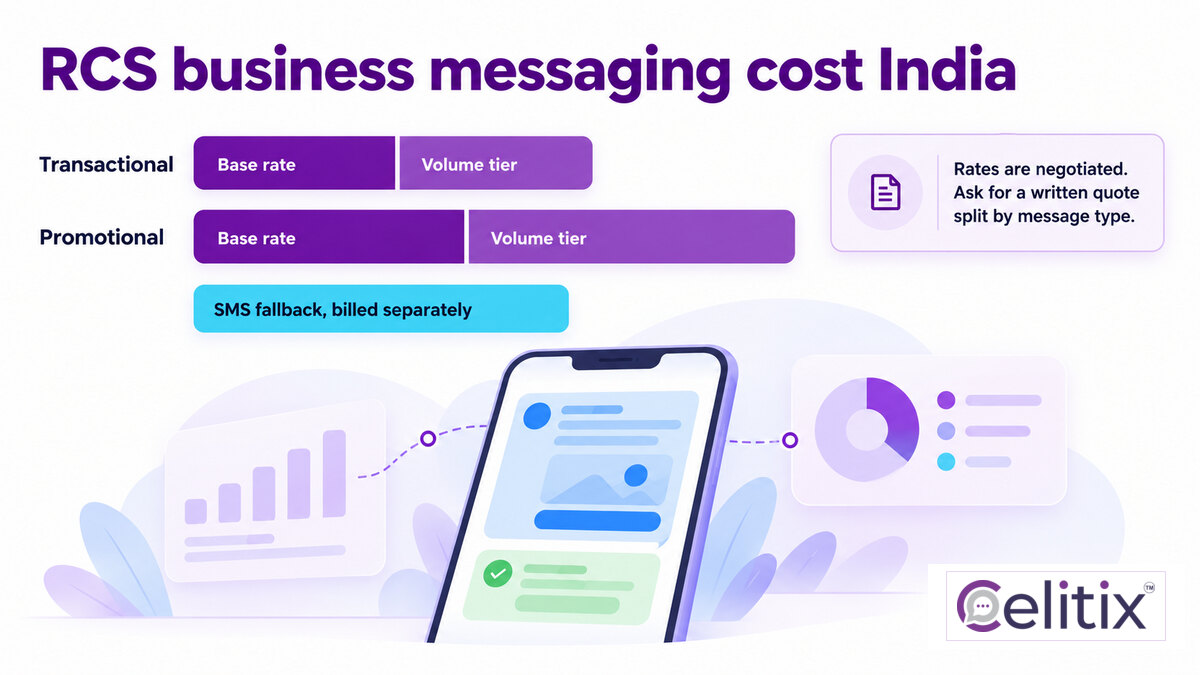
The structure is consistent across providers even though the rates are not:
Element | How it is charged | What moves it |
|---|---|---|
Transactional messages | Per message, lower rate | OTPs, order updates, service alerts |
Promotional messages | Per message, higher rate | Rich cards, carousels, campaigns |
Volume tiers | Rate drops at committed volume | Monthly commitment, minimum order sizes |
Fallback to SMS | Billed at the SMS rate | Share of handsets that cannot receive RCS |
Setup | Usually none | Some providers charge for brand onboarding |
Published Indian rate cards for RCS business messaging cost India sit in the region of twenty to thirty paise per message, with transactional lower than promotional. We are not quoting a figure as fact here, and you should be wary of any guide that does.
The reason is simple. One widely circulated provider page gives three different headline rates on the same page. Rates also move with volume commitment and are negotiated, so a published number tells you very little about what you will pay.
Ask for a written quote split by message type, with the fallback rate stated separately and the volume thresholds spelled out.
RCS SMS fallback, and what it does to the maths
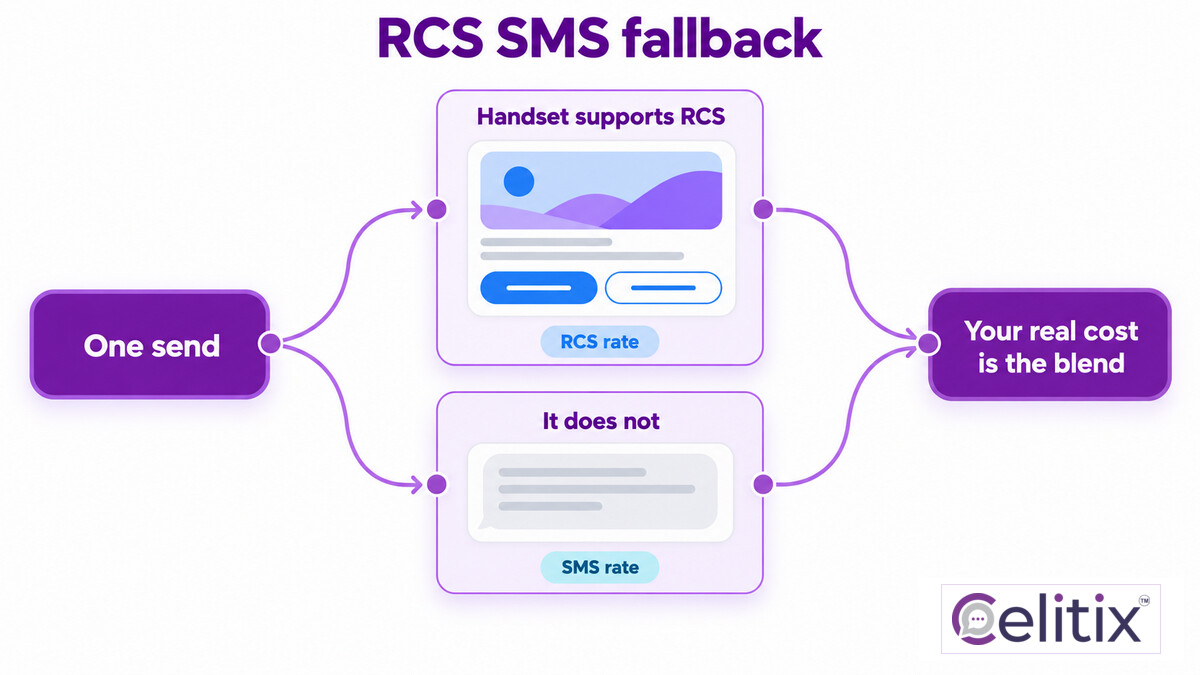
Not every handset receives RCS. When it cannot, a well configured campaign falls back to SMS, and you are billed at the SMS rate for that message.
This means your real cost per campaign is a blend, and the blend depends on your own contact list rather than on the rate card.
A list skewed to recent Android handsets delivers mostly RCS, so the blended cost sits near the RCS rate
A list with many older or feature phones falls back often, so the blended cost drops toward the SMS rate, and so does the rich experience you were paying for
Apple added RCS support from iOS 18, so iPhone reach is improving but depends on handset and carrier readiness
Before committing to RCS business messaging India at volume, run one campaign and measure your own fallback share. That number, not a vendor projection, tells you whether the channel earns its rate on your list.
RCS vs WhatsApp for business, decided honestly
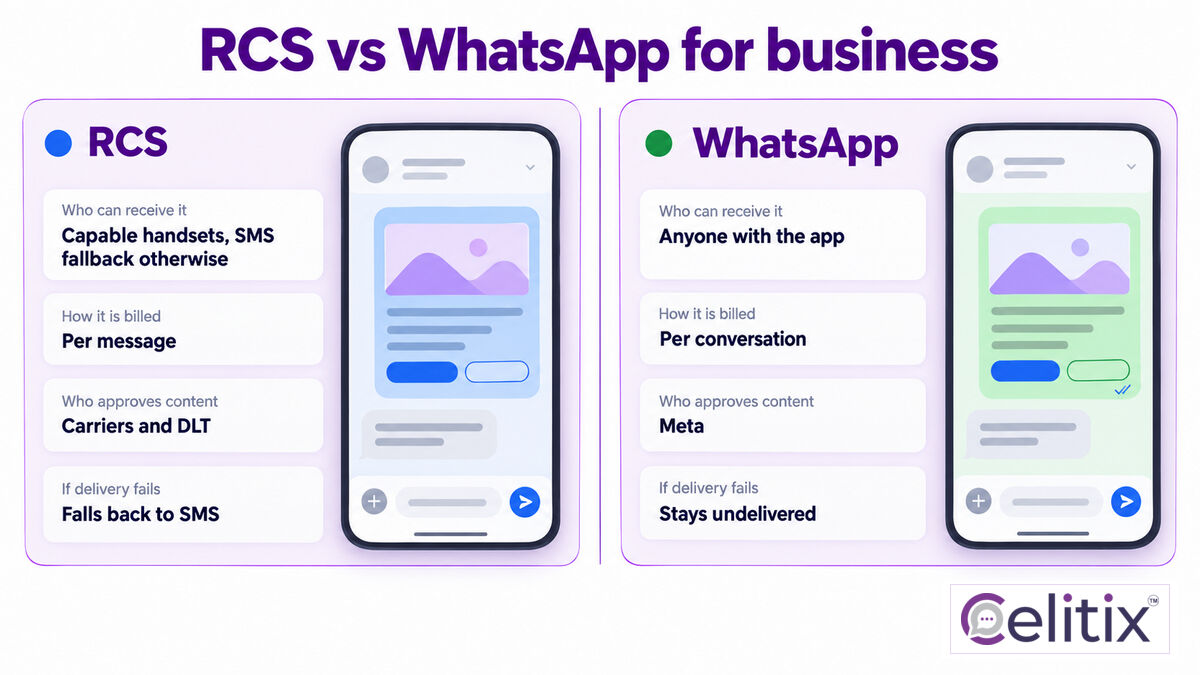
These are not competing channels so much as channels with different shapes. The comparison that matters is operational.
Question | RCS | |
|---|---|---|
Who can receive it | Capable handsets on a supporting carrier, SMS fallback otherwise | Anyone with the app installed |
How it is billed | Per message | Per conversation window |
Who approves content | Carriers, plus DLT templates | Meta |
Who the customer replies to | Your messaging app thread | A chat they already use daily |
Identity signal | Verified brand in the handset | Business profile, badge if granted |
In practice RCS vs WhatsApp for business resolves by use case. High volume one way alerts where per message billing is cheaper lean RCS. Conversations where the customer will reply, and reply again, lean WhatsApp because the conversation window covers the exchange.
If you are weighing the WhatsApp side specifically, the WhatsApp API against the Business app covers what that route requires.
A realistic launch sequence
Confirm or complete DLT entity registration, because it gates template approval
Prepare the brand profile assets, since a weak logo or vague description slows carrier review
Submit brand registration to all three carriers at once rather than one at a time
Register templates while carrier approval is pending
Run one measured campaign and record your actual fallback share
Only then negotiate volume pricing, with your real blend as the basis
What goes wrong most often
Three failures account for most stalled launches in RCS business messaging India. Brand assets that do not meet carrier requirements. Templates submitted before entity registration completed. And volume commitments signed before anyone measured the fallback share.
Common questions
Do I need DLT registration for RCS business messaging India?
Yes. Indian carriers apply template registration to RCS traffic as well as SMS. Entity registration has to be in place first.
How to get RCS verified sender approval across all carriers?
Register the brand profile with Jio, Airtel and Vi. Approval is granted per carrier, so you can be live on some and pending on others.
What is the real RCS business messaging cost India?
It is a per message structure split by transactional and promotional, with volume tiers and a separate fallback rate. Published figures vary widely and are negotiated, so get a written quote.
Does RCS SMS fallback cost extra?
You pay the SMS rate for a message that falls back. Your true campaign cost is a blend, and the blend depends on your own contact list.
Should I choose RCS vs WhatsApp for business?
Usually both, for different jobs. Per message billing suits one way alerts at volume. Conversation billing suits exchanges where the customer replies.
Where to start with Celitix
Celitix runs brand registration across the three carriers and handles template submission, so the carrier side of RCS business messaging India sits with us rather than with you.
Before you commit to anyone, including us, our evaluation checklist for a CPaaS partner sets out what to get in writing.
Talk to Celitix about an RCS launch