WhatsApp for logistics, the five messages that stop the calls
WhatsApp for logistics, the five messages that stop the calls
Table of Contents
Why a tracking link does not stop the where is my parcel calls
Which courier tracking updates WhatsApp for logistics should send
Confirming a COD order with WhatsApp for logistics before dispatch
Why a tracking link does not stop the where is my parcel calls
Teams adopting WhatsApp for logistics usually start here. A link asks the customer to do work. They have to find the email, open a browser, wait for a page and read a status written for warehouse staff.
WhatsApp for logistics inverts that. The status arrives in a thread the customer already has open, in a sentence they can read without tapping anything.
The second effect matters more. Because the thread is two-way the customer can answer. A tracking page cannot accept a new address, a gate code or a Saturday slot, and each of those otherwise becomes a phone call.
Which courier tracking updates WhatsApp for logistics should send
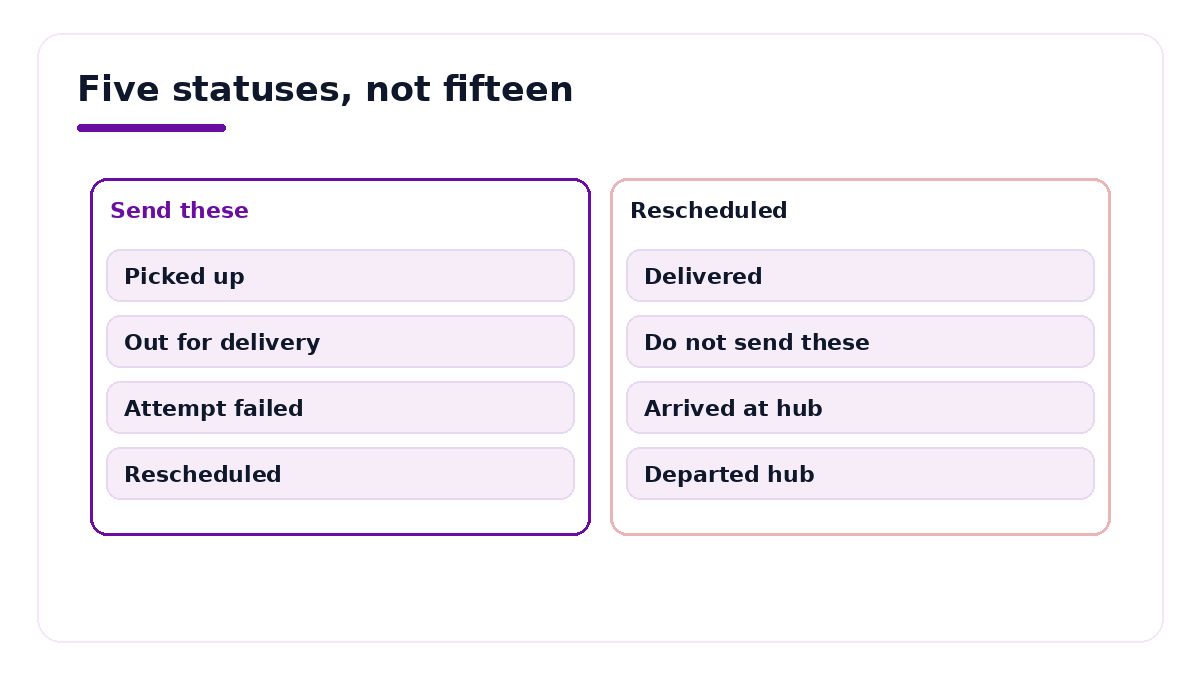
Fewer than most operators send. WhatsApp for logistics works best when the list is short, because every status that does not change what the customer does is noise, and noise costs you the quality rating.
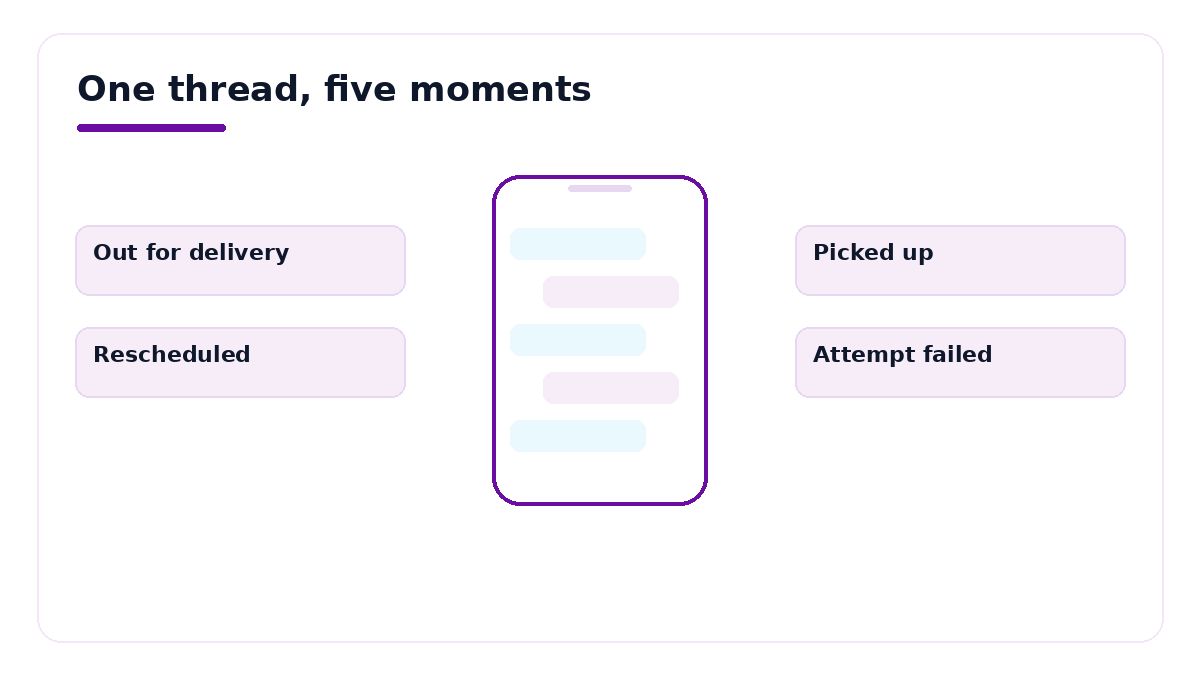
Order picked up. With the promised delivery date, which sets the expectation once
Out for delivery. With a window and the rider first name
Attempted and failed. With a reschedule option inside the same message
Rescheduled and confirmed. So the customer knows the new slot stuck
Delivered. With a one-tap way to report a problem
Resist the warehouse statuses. In-transit scans at every hub produce courier tracking updates that look like progress internally and read as spam externally.
Utility templates cover all five, because each relates to an order the customer placed. Sending these courier tracking updates as marketing templates raises the cost and the block rate at the same time.
How a failed delivery reattempt message saves a second trip
A failed attempt is the most expensive event in last-mile delivery, and it is where WhatsApp for logistics pays for itself. The van has already driven to the address.
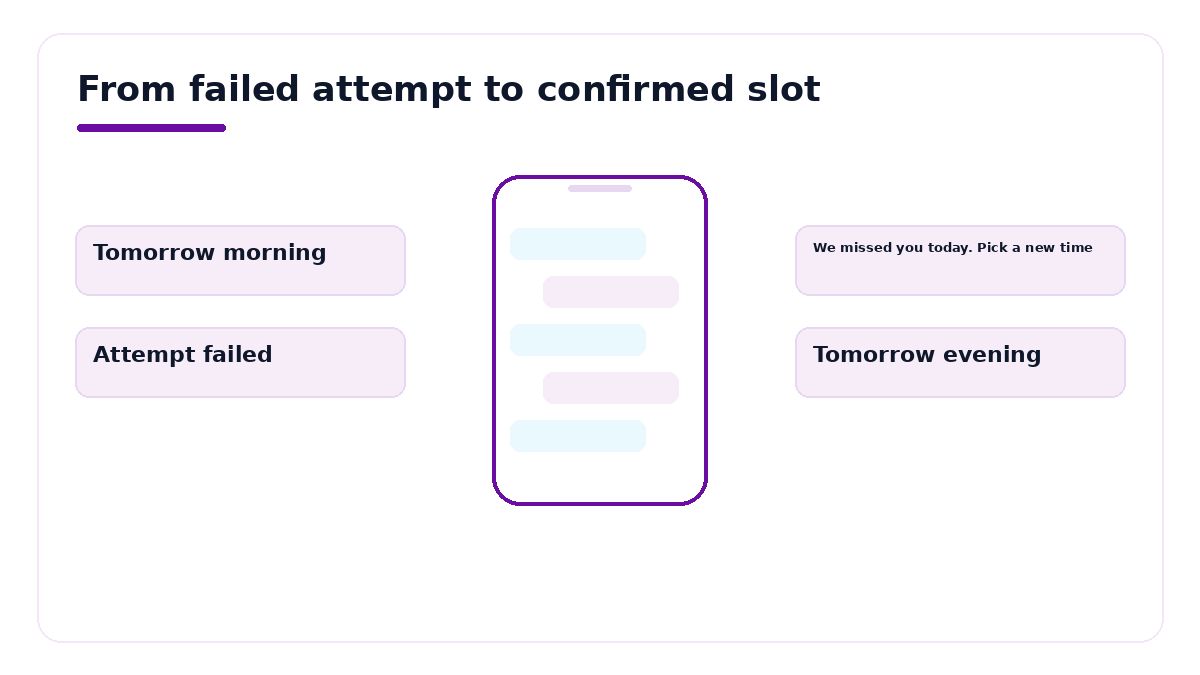
A failed delivery reattempt message sent within minutes states what happened, offers the next two available slots and accepts a reply, so the reattempt is scheduled against a time the customer confirmed.
Step | Without the thread | With a failed delivery reattempt message |
|---|---|---|
Customer learns of the failure | Next day, or when they call | Within minutes |
New slot agreed | Call centre, two touches | One reply in the thread |
Address correction | Rarely captured | Captured before the next trip |
Second failed attempt | Common | Much less likely |
Offer two slots, never a free-text question. Open questions produce replies your system cannot parse, which puts a human back in the loop and removes the saving.
Confirming a COD order with WhatsApp for logistics before dispatch
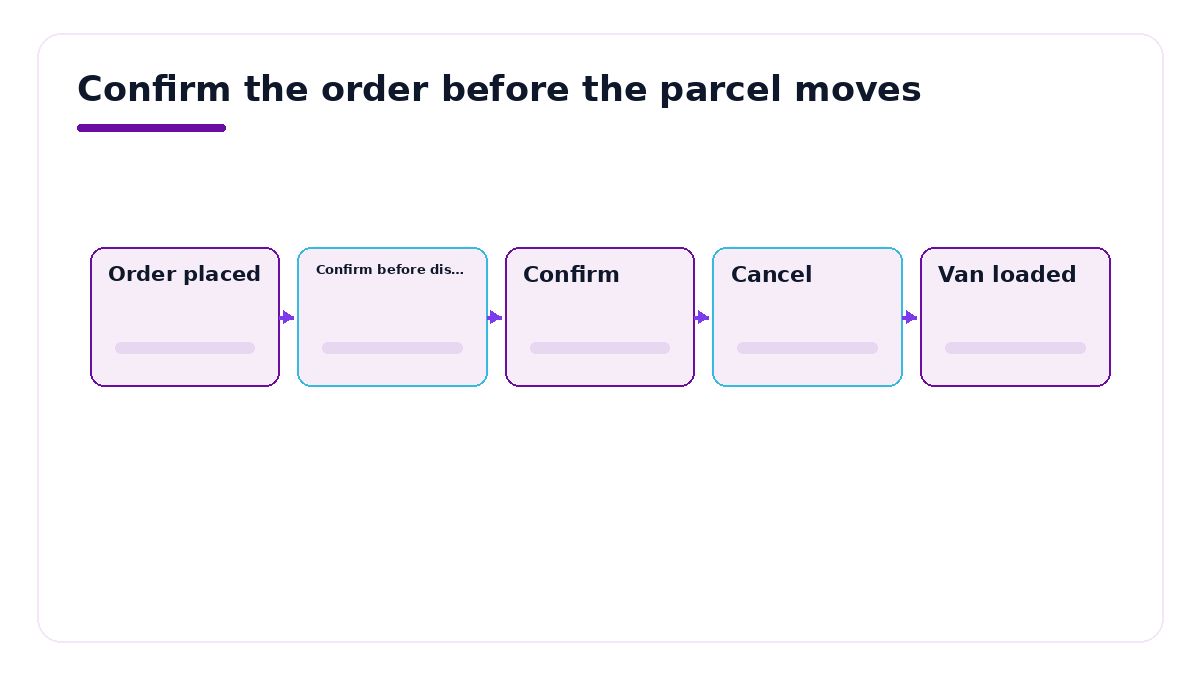
This is the highest-value use of WhatsApp for logistics in Indian ecommerce, and it happens before the parcel moves. One message asking the customer to confirm the order and the amount removes a share of returns at the cheapest possible moment.
Keep it to one question with two buttons, confirm or cancel. Anything longer invites a conversation that delays dispatch, and the point is to clear the order for the van.
Pair it with retail and ecommerce flows so the confirmation is written back to the order record. A confirmation nobody reads into the warehouse system has not saved anything.
What a rider can do inside a WhatsApp for logistics thread
WhatsApp for logistics lets a rider reach the customer without exposing either phone number. Number masking puts the call through a proxy, so the rider can ask about a gate code without the customer keeping a personal mobile number afterwards.
That matters on both sides. Riders change routes and employers, and customers who get calls from a saved personal number months later complain to the brand.
The number masking service India guide covers the proxy setup. For a rider team that needs to be called rather than to call, see click to call and privacy protected calling India.
What this costs against a call centre
Compare WhatsApp for logistics on cost per resolved query, not per message. A utility conversation costs a fraction of an inbound call, but the real saving is the call that never arrives because the status was already in the thread.
Count four lines: the conversation charge, your platform margin, agent time on chats that still escalate, and the avoided second delivery attempt. The last is usually the largest and the one nobody puts in the business case.
WhatsApp API conversation pricing sets out the billing windows and pricing covers the platform side. Meta states which conversations count as utility in its platform pricing documentation.
The nine checks before the first shipment
Opt-in at checkout. With the source and timestamp stored against the contact
Five statuses only. Each mapped to a utility template
Hub scans excluded. Warehouse progress stays out of the customer thread
Two fixed slots. Never a free-text reschedule question
Replies written back. Address and gate-code answers reach the shipment record
COD in one question. Confirm or cancel, nothing longer
Masked rider calls. Routed through a proxy on both sides
Human escalation. For anything the flow cannot parse
Opt-out tested. Present in the first message and actually working
The channel runs on WhatsApp Business API with automation from WhatsApp chatbot, and order events arrive through integrations.
The same patterns drive Shopify order updates on WhatsApp and WooCommerce order notifications. For non-WhatsApp handsets see SMS marketing and the SMS delivery report tool.
Calls that still arrive are covered by inbound dialer, and the number health behind all of it in WhatsApp quality rating.
Where to start with Celitix
Send us your current status list and we will tell you which five belong in the customer thread, which are warehouse noise, and what the reattempt flow looks like against your own delivery data.
Map your statuses to five messagesCommon questions
How many tracking messages should a courier send on WhatsApp?
Five. Picked up with the promised date, out for delivery with a window, attempted and failed with a reschedule option, rescheduled and confirmed, and delivered. Hub scans in between read as spam and cost you quality rating.
Are delivery updates billed as utility or marketing conversations?
Utility, because each one relates to an order the customer placed. Sending them as marketing templates raises both the cost and the block rate, so check the category before each template batch.
How does a failed delivery reattempt message reduce second trips?
It reaches the customer within minutes, states what happened and offers two fixed slots. The reattempt is scheduled against a time the customer confirmed, and address errors get corrected before the van goes out again.
Can WhatsApp confirm a COD order before dispatch?
Yes, and it is the highest-value use of the channel for Indian ecommerce. One question with a confirm and a cancel button, sent before the parcel moves, removes a share of returns at the cheapest possible point.
How do riders call customers without sharing phone numbers?
Through a masked number, which routes the call via a proxy so neither side keeps the other personal number. That protects the customer from later calls and the rider from being contacted after changing employer.