Customer retention whatsapp campaigns, four windows and what to send in each
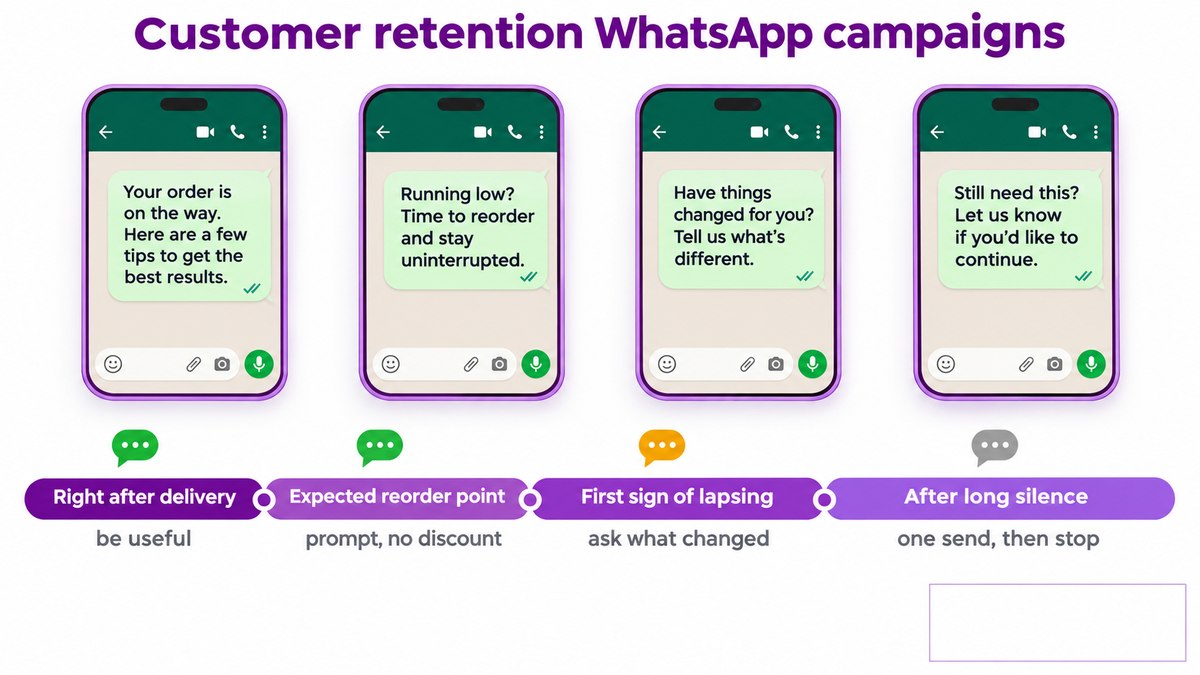
Table of Contents
Retention is a timing problem, not an offer problem
Most customer retention whatsapp campaigns fail because they send the right message at the wrong moment, then try to fix it with a bigger discount. The discount is not the fix.
Four windows matter, and each one takes a different message. Send the reorder prompt in the lapse window and it reads as a chase. Send the lapse question at the reorder point and you have given up on a customer who was going to buy anyway.
The four windows customer retention whatsapp campaigns work in
Window | What to send | What not to send |
|---|---|---|
Right after delivery | Confirmation, then something useful about the product | A cross sell on day one |
At the expected reorder point | A reorder prompt, no discount | An offer, which trains them to wait |
First sign of lapsing | One question about what changed | Escalating discounts |
After long silence | One send, then stop | A sequence. They are gone |
The second row is where the money is and where most senders go wrong. A reorder prompt at the right moment converts without a discount, because the customer already wanted the thing.
Why WhatsApp suits this and email does not
You already have the number, they already replied to you once, and a reorder can be a single button rather than a login. The channel's strength here is not reach, it is that the whole transaction fits in two taps.
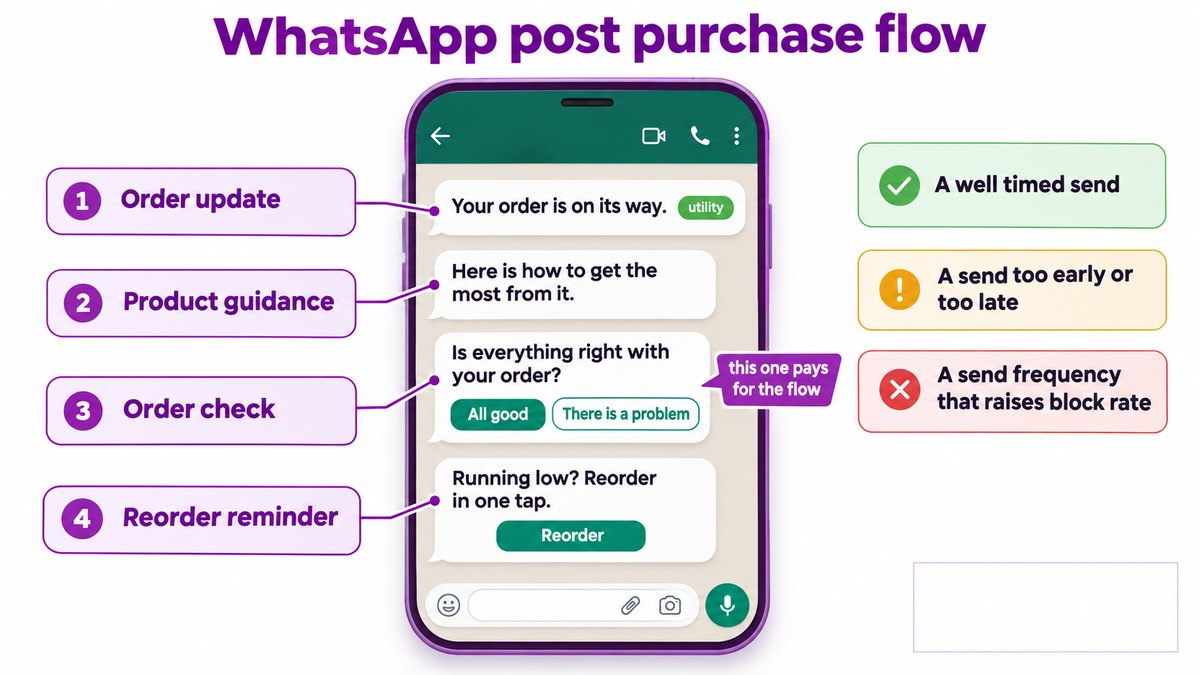
WhatsApp post purchase flow
The cheapest part of customer retention whatsapp campaigns and the most commonly skipped, because it feels like admin rather than marketing.
Delivery confirmation. Utility category, cheap, and it deflects a support call
Something useful. How to use it, how to care for it, what people get wrong. Not a sell
One question. Is everything right? This catches the complaint before it becomes a review
Reorder prompt. Timed to the product cycle, which is the next section
The third step pays for the whole flow. A customer who tells you privately that something was wrong is a customer you can keep, and the alternative is finding out from a public review you cannot answer.
These first steps are utility templates, which cost a fraction of marketing ones. The split is in WhatsApp API conversation pricing, and the template wording in message template examples.
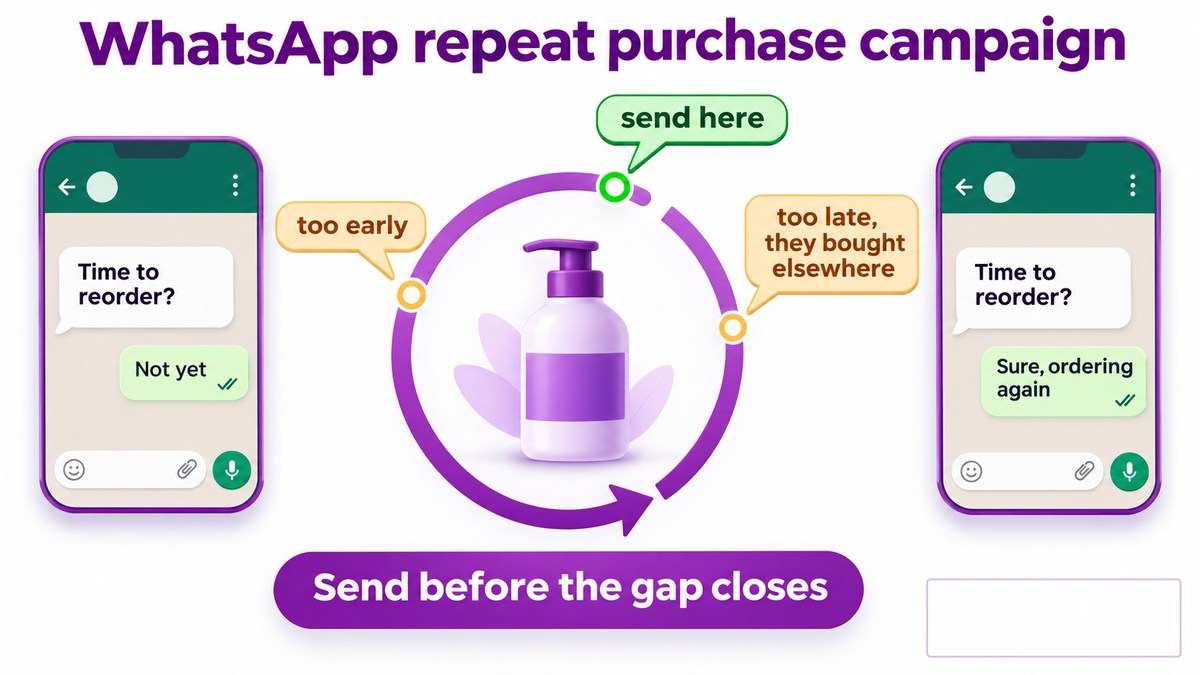
WhatsApp repeat purchase campaign
Work out how long the product lasts, then send slightly before it runs out. That is the entire technique and it beats every offer based approach.
Consumables. Count the days from your own order data, not from an assumption
Send before the gap closes. A prompt arriving after they have bought elsewhere is wasted
One prompt, not a sequence. If the first is well timed, a second adds nothing
No discount in the first prompt. Hold that for the lapse window if you need it at all
Getting the interval from your own data matters more than it sounds. Two customers buying the same product can be on very different cycles, and a whatsapp repeat purchase campaign on a single global interval will be early for half your list and late for the other half.
What this looks like when it works
The customer does not experience it as marketing. They experience it as the shop noticing, which is why it does not attract blocks the way a promotional send does.
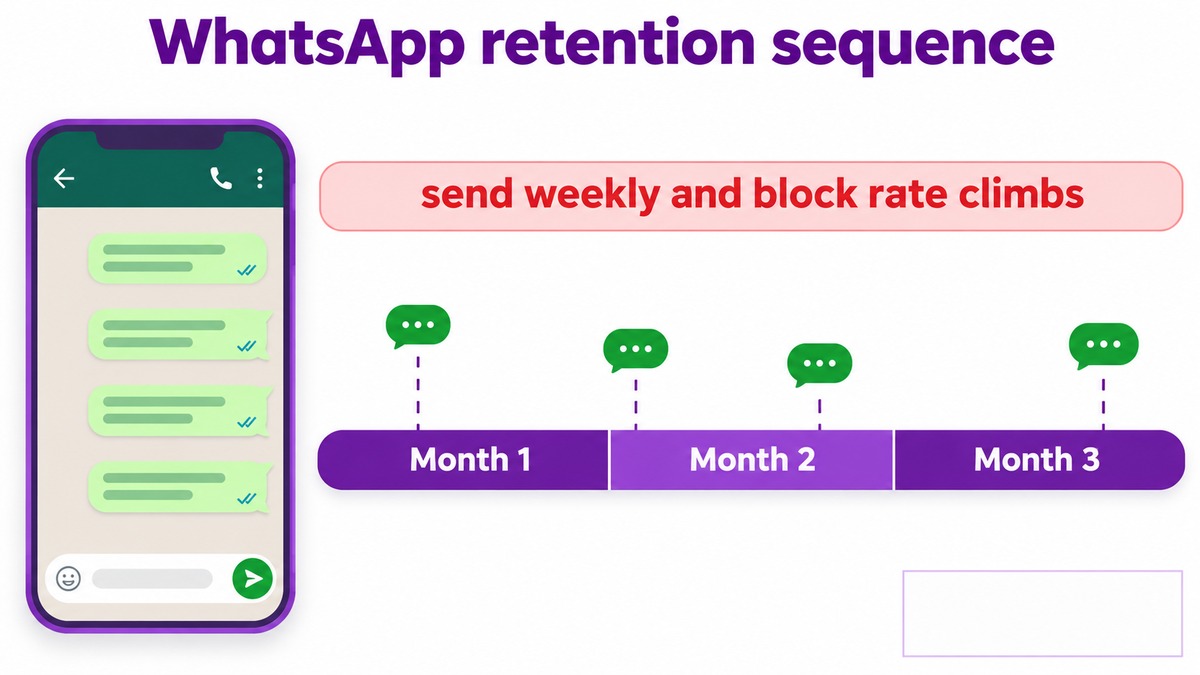
WhatsApp retention sequence, and how often to send
Four sends a quarter is a defensible ceiling for most businesses. Weekly is how a list gets blocked.
The constraint on customer retention whatsapp campaigns is not the cost of the messages. It is your quality rating, which moves on blocks and reports, and once it falls your daily limit falls with it.
That affects the utility messages you actually need to send, so an over enthusiastic marketing calendar can break your order confirmations. Meta documents the tier mechanics in its Cloud API reference.
Space the sends unevenly, around real events rather than on a calendar rhythm
Let a reply reset the clock. Someone who just spoke to you does not need a campaign
Suppress recent buyers from promotional sends, always
Watch block rate weekly, not monthly, because it is a lagging signal
The measurement side is in our WhatsApp campaign analytics guide, and the rating mechanics in quality rating.
What to measure on customer retention whatsapp campaigns
Retention reporting goes wrong in a specific way: it credits the campaign with purchases that were going to happen anyway.
Hold back a control group. Five percent who get no retention sends, so you can see what the campaigns actually added
Measure repeat rate, not campaign conversions. A reorder prompt that catches a customer on their way to buying is not incremental
Track time between orders. If customer retention whatsapp campaigns are working, that gap shortens
Watch block rate against send frequency, on the same chart, weekly
The control group is the uncomfortable one, because it means deliberately not marketing to some customers. It is also the only way to know whether the programme is earning its message fees or just taking credit for loyalty you already had.
Run it for a full product cycle before reading the result. On a ninety day consumable, a four week test tells you nothing.
WhatsApp churn prevention message
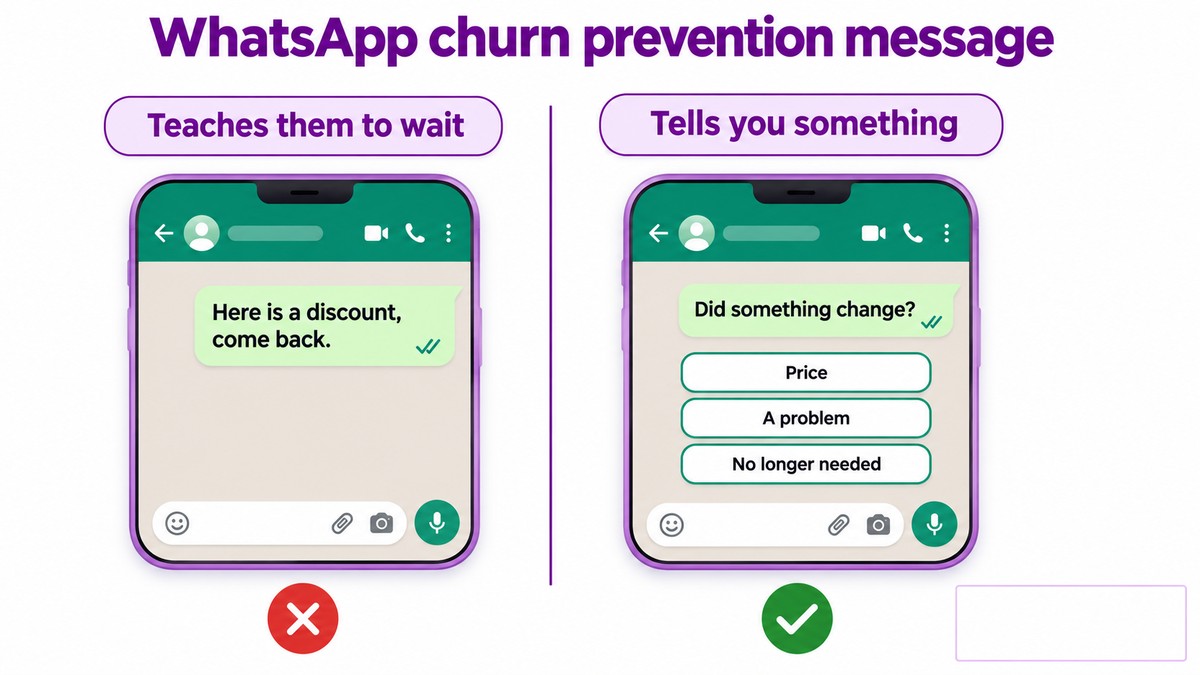
When someone lapses, the instinct is to discount. The better move is to ask.
A whatsapp churn prevention message that leads with an offer teaches your customers that going quiet produces a discount, and some of them will learn it. A message that asks what changed either recovers the customer or tells you something you can fix for the next hundred.
One question, not a survey. "Did something change?" with two or three reply buttons
Make the answer useful to you, with options like price, a problem with the last order, or no longer needed
Act on a problem answer the same day. That is the recovery
Accept the no longer needed answer. Suppress them and stop
Accepting the last one is the discipline. A customer who has told you they do not need the product is not a retention opportunity, and continuing to send to them is how you accumulate the blocks that cost you everyone else.
Loyalty mechanics, where they fit, are in loyalty programmes on WhatsApp. Consent for marketing to existing customers is covered in sending bulk WhatsApp messages legally.
Common questions
Do customer retention whatsapp campaigns need discounts?
What goes in a whatsapp post purchase flow?
How do I time a whatsapp repeat purchase campaign?
How often should a whatsapp retention sequence send?
What should a whatsapp churn prevention message say?
Where to start with Celitix
Celitix will set the reorder interval from your own order data rather than a default, and suppress recent buyers and repliers automatically.
Ask Celitix to map your reorder cycle