WhatsApp API uptime SLA, the nine clauses you must check first
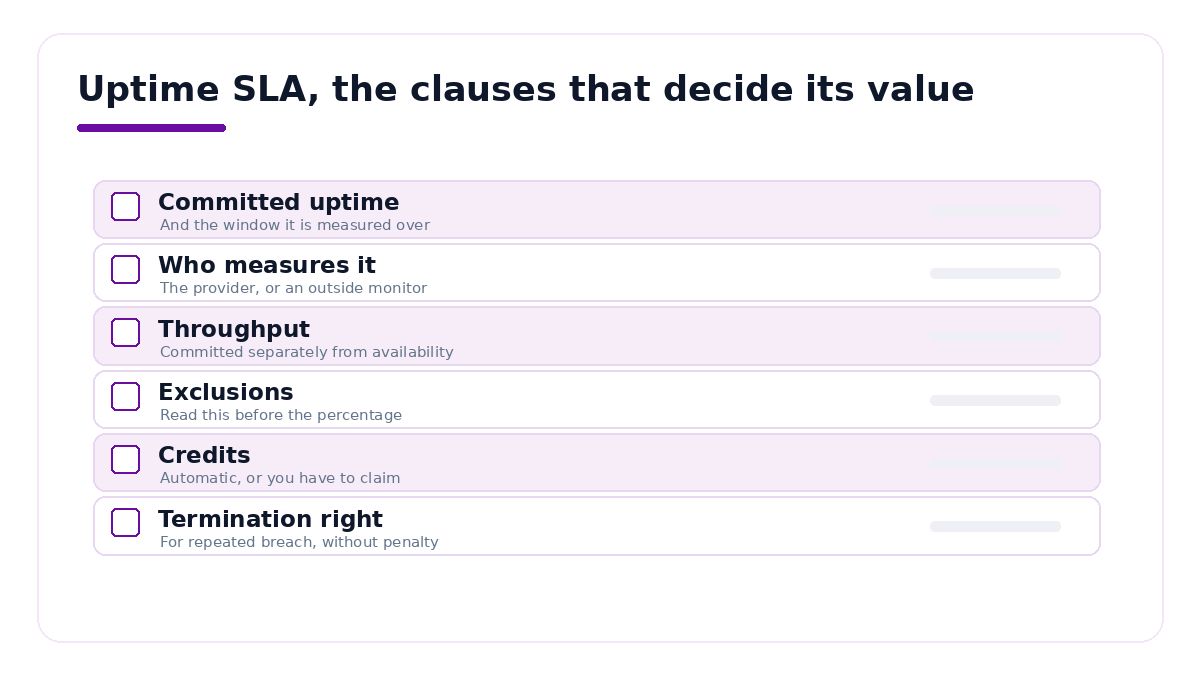
Table of Contents
What does a WhatsApp API uptime SLA actually promise
Most providers advertise 99.9 per cent. Almost nobody explains what the number is measured against, and that is where the value of a WhatsApp API uptime SLA is decided.
The same figure can mean a platform that was unreachable for 43 minutes last month, or one that quietly dropped a third of your messages without ever going down.
A WhatsApp API uptime SLA describes whether the platform answered. It says nothing about whether your messages were delivered. Those are separate promises.
Ask for both in writing: platform availability, and message throughput against the rate your account is provisioned for. If a provider commits to one but not the other, that tells you which part of the stack they trust.
How is uptime measured, and over what window
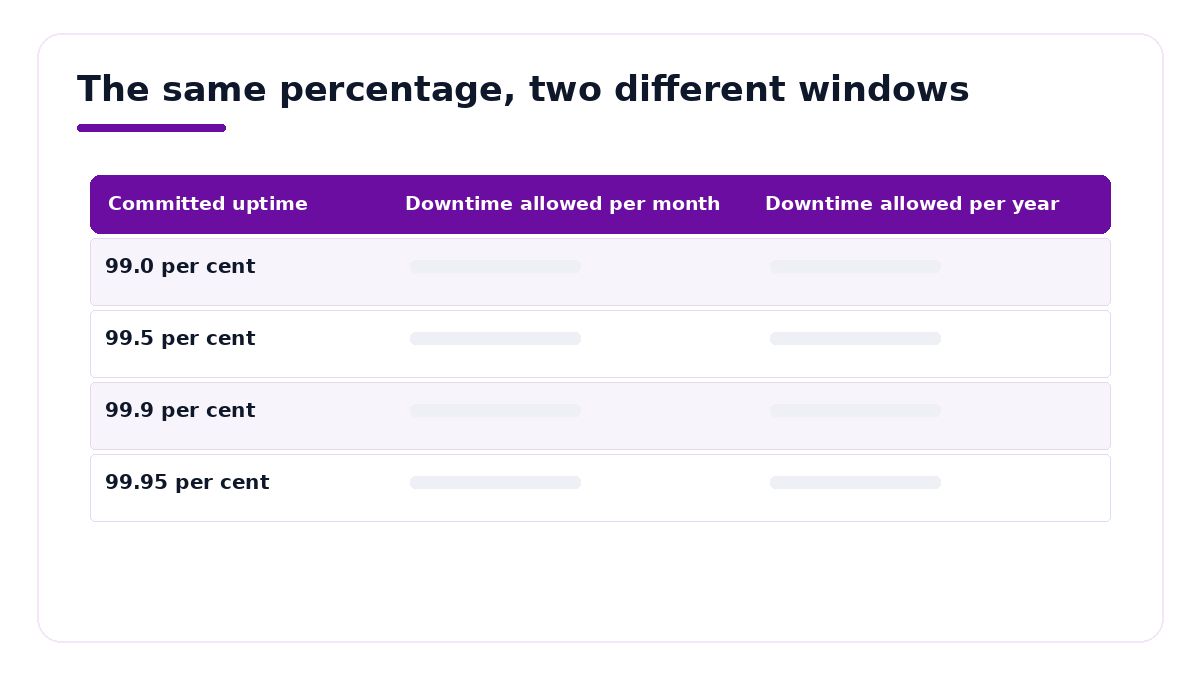
The measurement window changes the arithmetic more than the percentage does. 99.9 per cent measured monthly allows about 43 minutes of downtime. The same figure measured annually allows nearly nine hours.
Committed uptime | Allowed downtime per month | Allowed downtime per year |
|---|---|---|
99.0 per cent | about 7 hours | about 3.6 days |
99.5 per cent | about 3.6 hours | about 1.8 days |
99.9 per cent | about 43 minutes | about 8.8 hours |
99.95 per cent | about 22 minutes | about 4.4 hours |
A WhatsApp API uptime SLA is only as good as its measurement method, so ask who measures it. A provider measuring itself from inside its own network sees a healthier platform than your servers do.
The honest answer is an external monitor, or at minimum a status page with a public incident history you can read before you sign.
Which outages does the contract quietly exclude
In a WhatsApp API uptime SLA, exclusions are where a strong-looking number becomes a weak promise. Read this section before the percentage, because it defines what the percentage counts.
Scheduled maintenance. Often unlimited, sometimes with no notice period stated
Anything upstream at Meta. On a chat channel that is a large share of incidents
Telecom and carrier faults. Which covers most SMS fallback failures
Degraded performance. A platform that is slow but reachable counts as available
Account-level throttling. Triggered by your own quality rating
Force majeure. Written broadly enough to absorb a data centre failure
The upstream exclusion is reasonable. No provider controls Meta. What matters is whether they commit to telling you inside a fixed number of minutes when the problem is upstream, so your team stops debugging its own code.
What a service credit is really worth
Under a WhatsApp API uptime SLA a service credit is usually a percentage of the monthly fee for the affected period, claimed within a stated window.
On a messaging account the platform fee is often the smallest line on the bill, so the credit rarely reflects the commercial damage of a four-hour outage during a festive campaign.
Two questions settle it. Is the credit automatic or claim-based, and is there a termination right if the service breaches in several consecutive months. The second is worth more, because it is the only clause that gives you an exit without a penalty.
Why a support response time guarantee matters more than uptime
Most incidents a WhatsApp API uptime SLA has to handle are not total outages. They are templates stuck in review, a number throttled after a quality drop, a webhook that silently stopped firing.
None of those register against an availability figure, and all of them stop your campaigns. A support response time guarantee is the clause that governs those days.
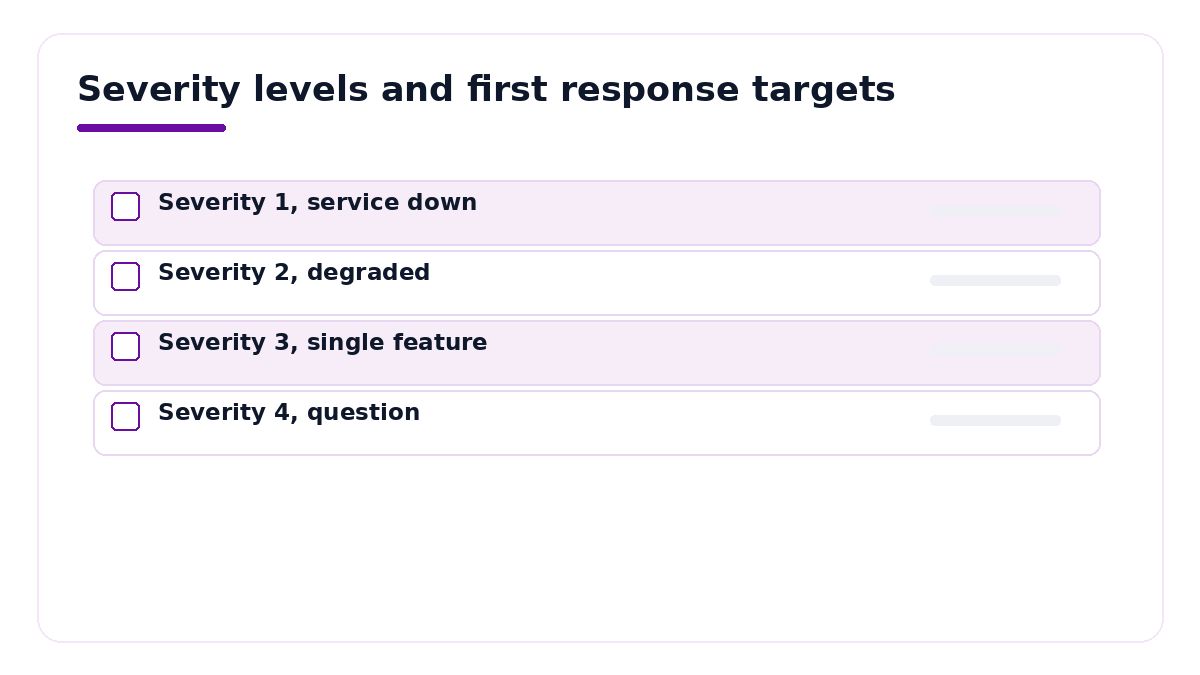
It should state severity levels, a first-response target for each, the hours it applies in and the channel it applies to. A support response time guarantee that covers only email during business hours is little use when a campaign breaks on a Sunday.
Check the time zone. A guarantee written against a European or US working day leaves an Indian team unattended through its own peak hours.
What an Indian business should check before signing
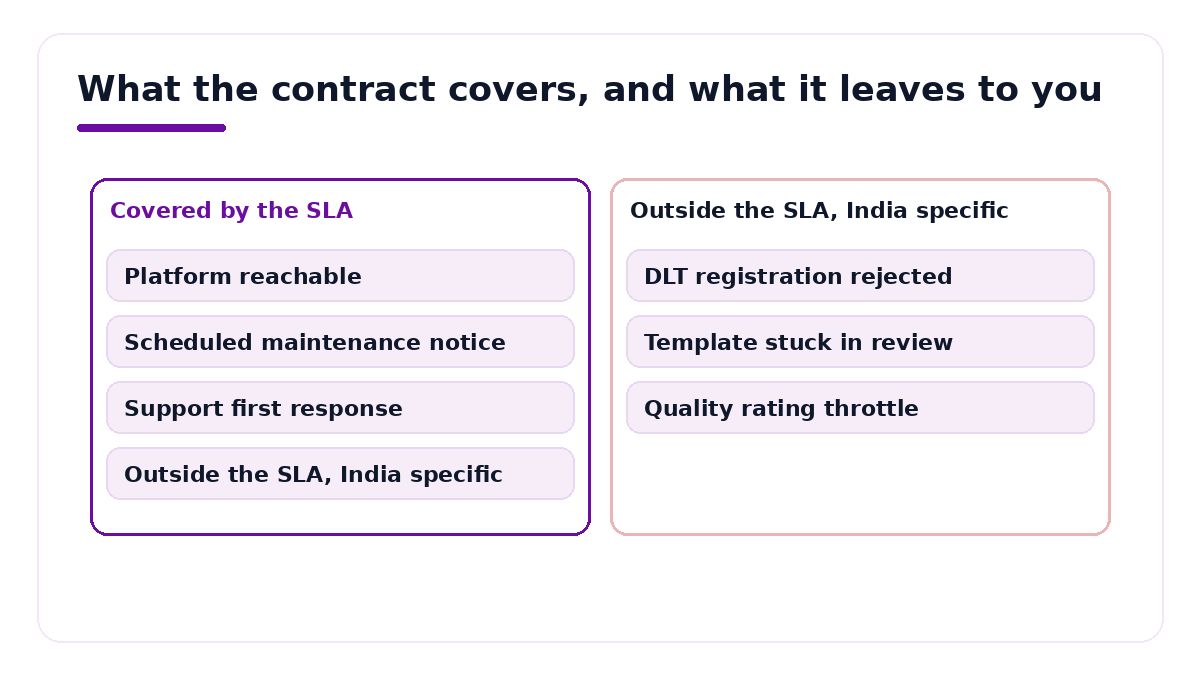
A messaging provider SLA sold into India has to cover ground a global template skips. DLT registration, template approval turnaround and carrier rejections all sit outside platform availability but decide whether messages arrive.
Ask whether template submission support is in scope, who is accountable when a DLT registration is rejected, and what the escalation path is when your WhatsApp quality rating drops.
A messaging provider SLA that ignores all three is a cloud hosting document with a chat logo on it. The messaging provider SLA you want names each one explicitly.
Meta publishes platform status separately from any provider, and the WhatsApp Business API status page lets you separate an upstream incident from a provider one in seconds.
The nine clauses, in order
Committed uptime. And the exact measurement window it applies to
Who measures it. And whether the incident history is public
Throughput. Committed separately from platform availability
Exclusions. The full list, read before the percentage
Maintenance. Notice period and a monthly cap
Severity levels. With a first-response target against each one
Support hours. Including the time zone and the channel per severity
Credits. Automatic or claim-based, and the claim deadline
Termination right. For repeated breach, with no exit penalty
A WhatsApp API uptime SLA only matters alongside the things it governs. If you are still choosing a platform, Celitix pricing sets out what is billed and the WhatsApp Business API page covers provisioning.
For how conversations are charged, see WhatsApp API conversation pricing. Teams on more than one channel should read CPaaS solutions and choosing a CPaaS provider in India.
If you are migrating, the WhatsApp API setup guide and integrations show what has to be re-pointed, SMS marketing covers the fallback channel, and WhatsApp campaign analytics covers the reporting you want before the first incident.
Where to start with Celitix
Celitix will send the uptime commitment, the exclusions list and the support targets in writing before any pricing conversation, so you can hold them against whatever you are running today.
Ask Celitix for the SLA in writingCommon questions
What uptime should I expect from a WhatsApp API provider?
99.9 per cent measured monthly is the normal commitment, which allows about 43 minutes of downtime a month. The percentage matters less than the measurement window and the exclusions, because the same figure measured annually allows nearly nine hours.
Does an uptime SLA cover message delivery?
Usually not. Uptime covers whether the platform answered, not whether your messages arrived. Delivery depends on template approval, quality rating and carrier behaviour, so ask for a separate throughput commitment in writing.
Are outages at Meta covered by my provider SLA?
Almost never. Upstream incidents at Meta are a standard exclusion, which is reasonable because no provider controls them. What you should insist on is a fixed notification time so your team stops debugging its own code.
What is a service credit worth in practice?
It is normally a percentage of the monthly platform fee for the affected period, claimed within a stated window. On a messaging account that fee is often small, so a termination right for repeated breach is worth more than the credit itself.
Why does a support response time guarantee matter so much?
Most real incidents are not outages. Templates stuck in review, a throttled number or a webhook that stopped firing never register against uptime but still stop campaigns. Check the severity levels, the hours and the time zone.