In chat purchase whatsapp, the payment step that loses the order
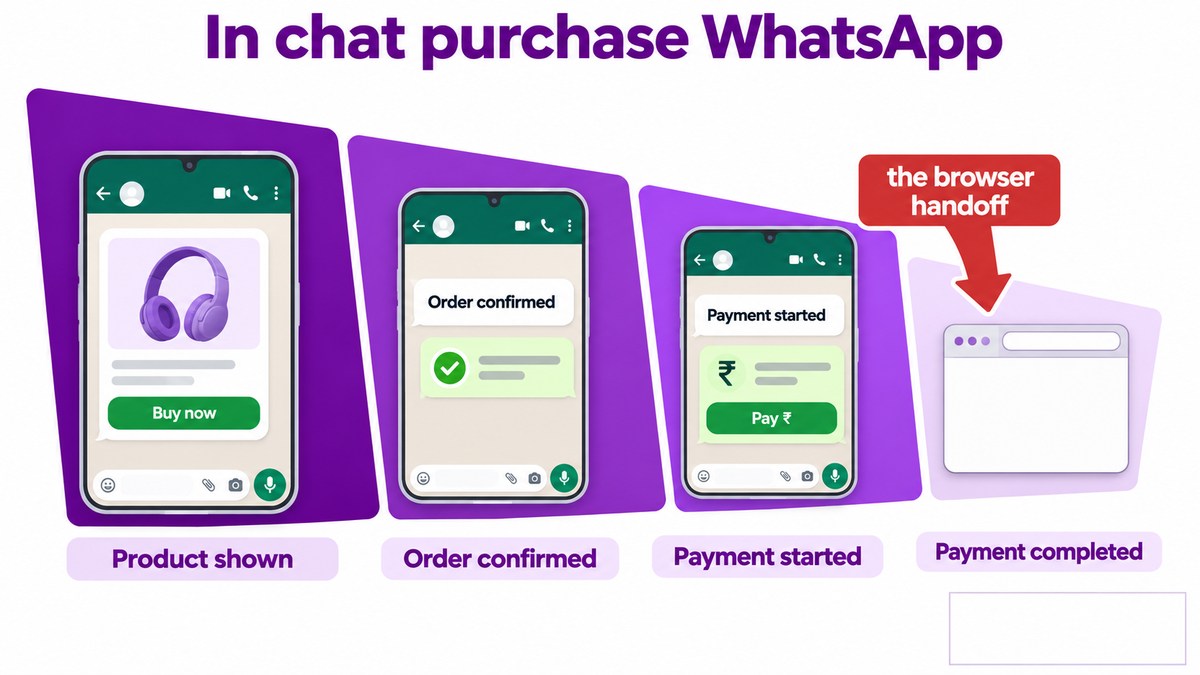
Table of Contents
An in chat purchase whatsapp order is lost at payment, not at product selection
Four steps happen in an in chat purchase whatsapp flow. Product shown, order confirmed, payment started, payment completed. The gap between the last two is where most of the loss sits, and it is almost entirely self inflicted.
The cause is usually a payment link that opens a browser. The customer came into a conversation precisely to avoid a web checkout, and the last step hands them one.
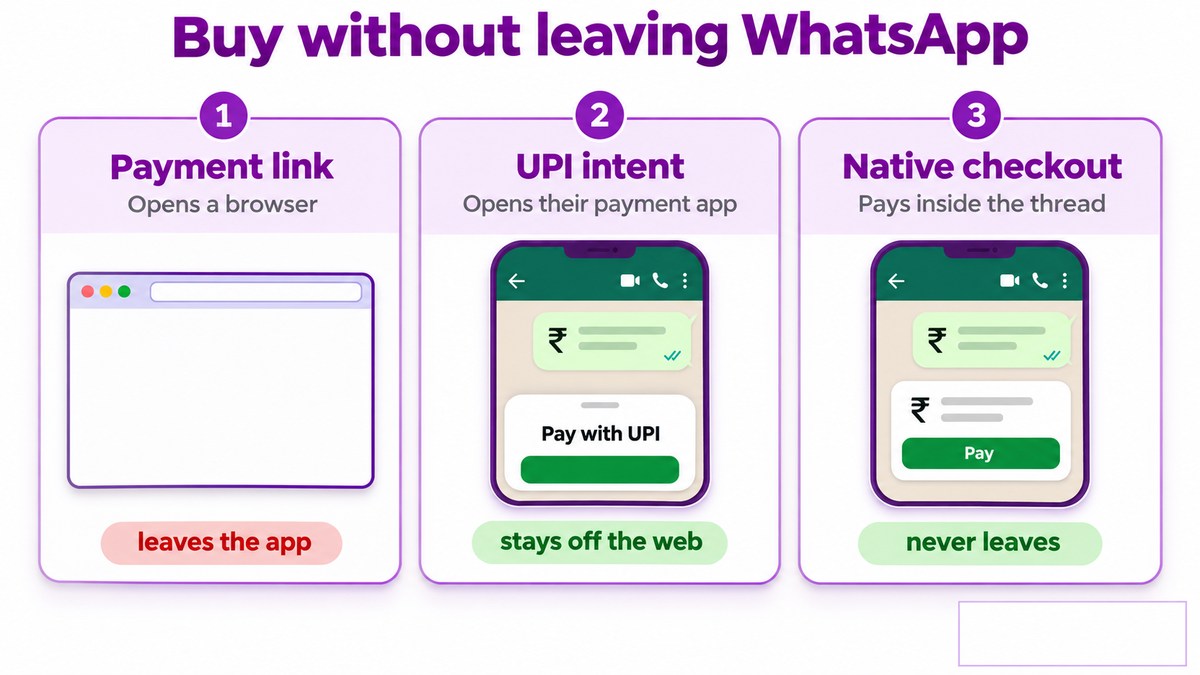
Buy without leaving whatsapp, the three routes
Route | Does the customer leave the app? | Where it loses orders |
|---|---|---|
Payment link | Yes, into a browser | Page load, a second decision, a form |
UPI intent | Into their UPI app, not a browser | Only if no UPI app is installed |
Native checkout | No | Availability, not behaviour |
The middle column is the whole story. A browser is a different mental mode, and a customer who is pushed into one has effectively been asked to start again.
Why the payment link survives anyway
Because it works everywhere, with any gateway, with no integration. It is the honest default for a seller testing whether the channel sells at all. The mistake is leaving it in place once you know it does.
In chat payment flow whatsapp, using UPI
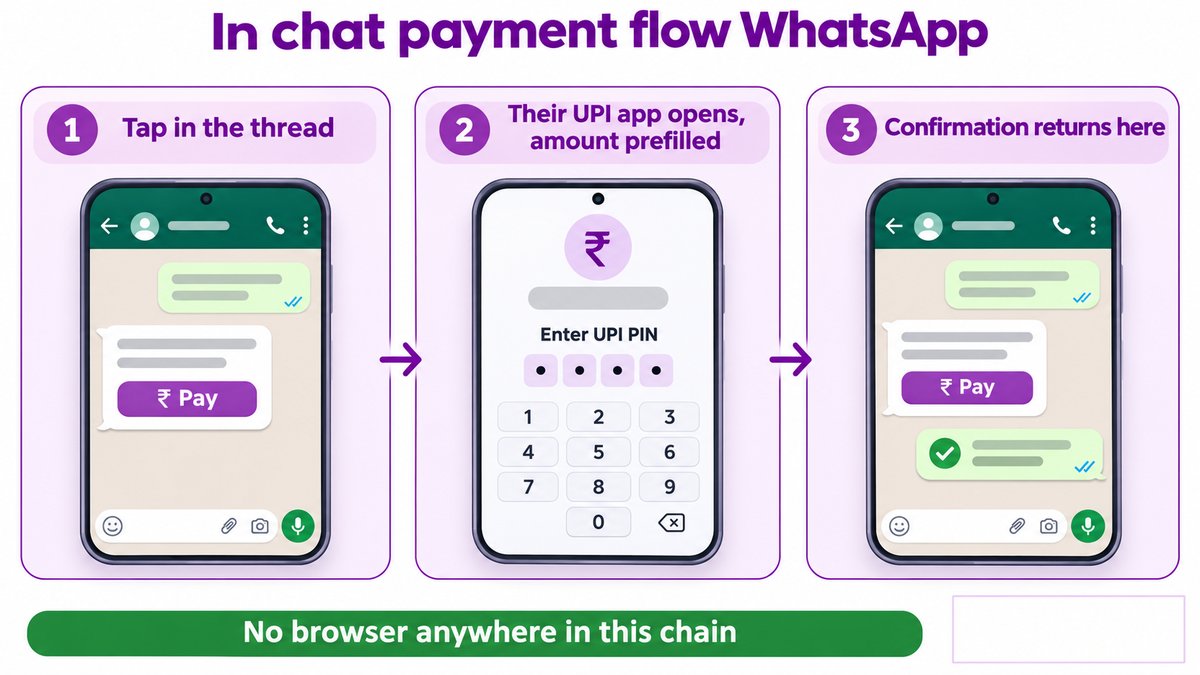
For most Indian sellers this is the practical answer today, and it is close to the native experience.
The customer taps a pay button in the thread
Their UPI app opens with the amount already filled in. No typing, no page load
They approve with a PIN, which they have done a thousand times
The confirmation comes back into the same conversation
That last step is the one implementations skip, and it costs more than it looks. The reconciliation rules sit with NPCI, but the design requirement is simple: the thread has to acknowledge the payment.
What to handle before launch
Partial and failed payments. The thread must say what happened, not go quiet
Duplicate taps. A customer who taps twice must not be charged twice
Expiry. A request that is minutes old should not be payable tomorrow at yesterday's price
Timeouts. If no confirmation arrives, say so and offer to check rather than leaving silence
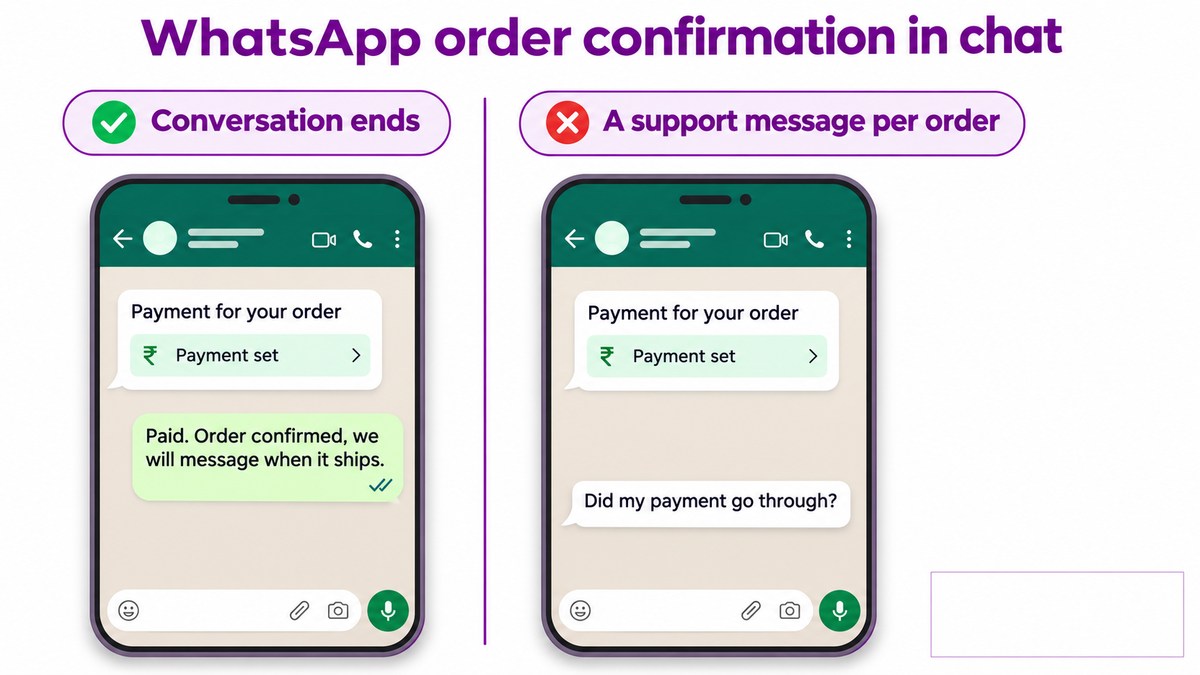
Silence after a payment attempt is the single worst outcome in an in chat purchase whatsapp flow, because the customer does not know whether money left their account. They will message you to ask, which costs a support interaction on every uncertain order.
WhatsApp native checkout
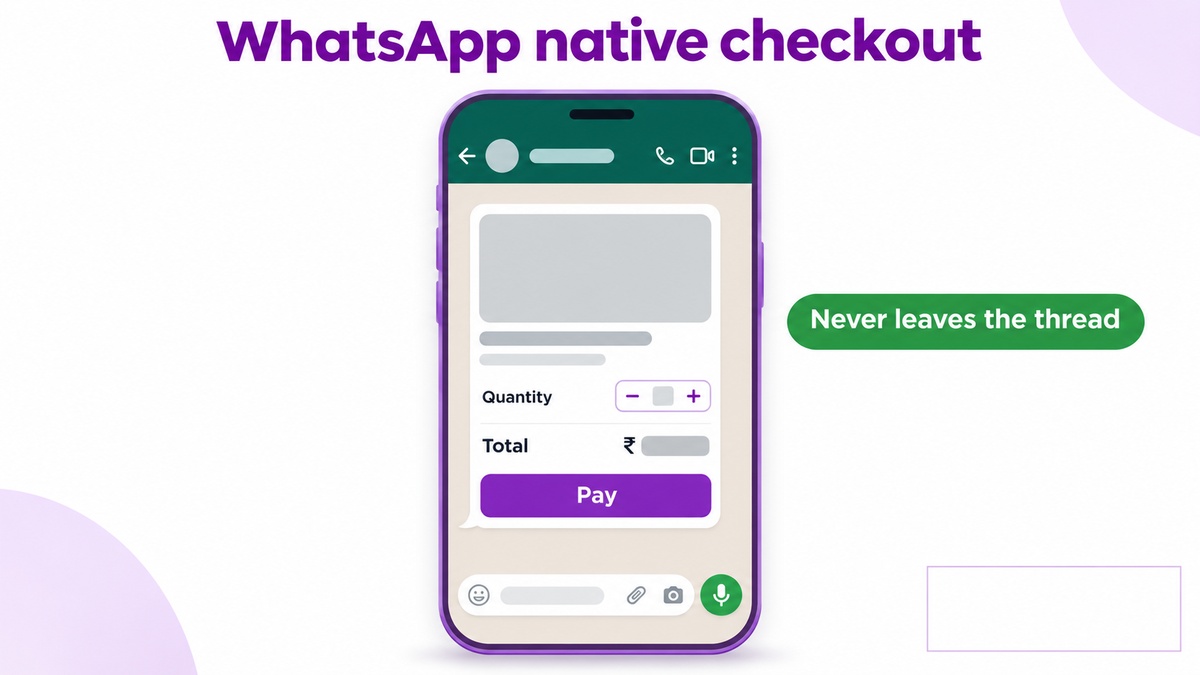
Where it is available, this is the best version. The product card, the quantity, the total and the payment all sit inside the thread, and the customer never changes context.
Availability varies by market and by payment provider, so confirm it for your setup rather than assuming
The catalogue has to be connected properly, which is a prerequisite rather than a detail. See WhatsApp catalog integration
Your order system still needs telling, because a paid order nobody ships is worse than no order
Refunds happen outside the thread in most setups, so decide how you will handle them
Check availability before designing around it. A whatsapp native checkout promised in a demo and unavailable for your payment provider is a project that quietly becomes a payment link.
One sequencing note. If native checkout is not available to you yet, build the in chat purchase whatsapp flow on UPI intent now rather than waiting. The confirmation handling, the duplicate protection and the order system wiring are the same work either way, so none of it is wasted when you switch.
WhatsApp order confirmation in chat
The cheapest step in the flow and the one that saves the most support time.
A confirmation in the thread ends the conversation cleanly. Without it, a noticeable share of customers message to ask whether the order went through, and you are paying a person to answer a question your own flow created.
Send it immediately, not on the next batch job
Include the order reference, so later messages can refer to it
Say what happens next and when, which prevents the second question
Keep it utility category. Adding a cross sell makes it a marketing template at several times the cost
The category point is worth checking against your template before submission. Pricing by category is in WhatsApp API conversation pricing, and the post purchase sequence in customer retention campaigns.
What to measure on an in chat purchase whatsapp flow
Payment started against payment completed, as its own ratio
Time from payment to confirmation in the thread
Support messages asking whether an order went through, which should trend to zero
The same four steps compared against your store checkout on the same products
The wider measurement frame is in the conversational commerce platform guide.
Common questions
Where does an in chat purchase whatsapp flow lose most orders?
How can customers buy without leaving whatsapp?
Is whatsapp native checkout available to everyone?
What must an in chat payment flow whatsapp handle?
Why does a whatsapp order confirmation in chat matter?
Where to start with Celitix
Celitix will confirm which payment routes are actually available for your provider, and wires the confirmation back into the same thread rather than leaving it to a batch job.
Ask Celitix which payment route fits