Citizen messaging platform, alerts and schemes for government bodies
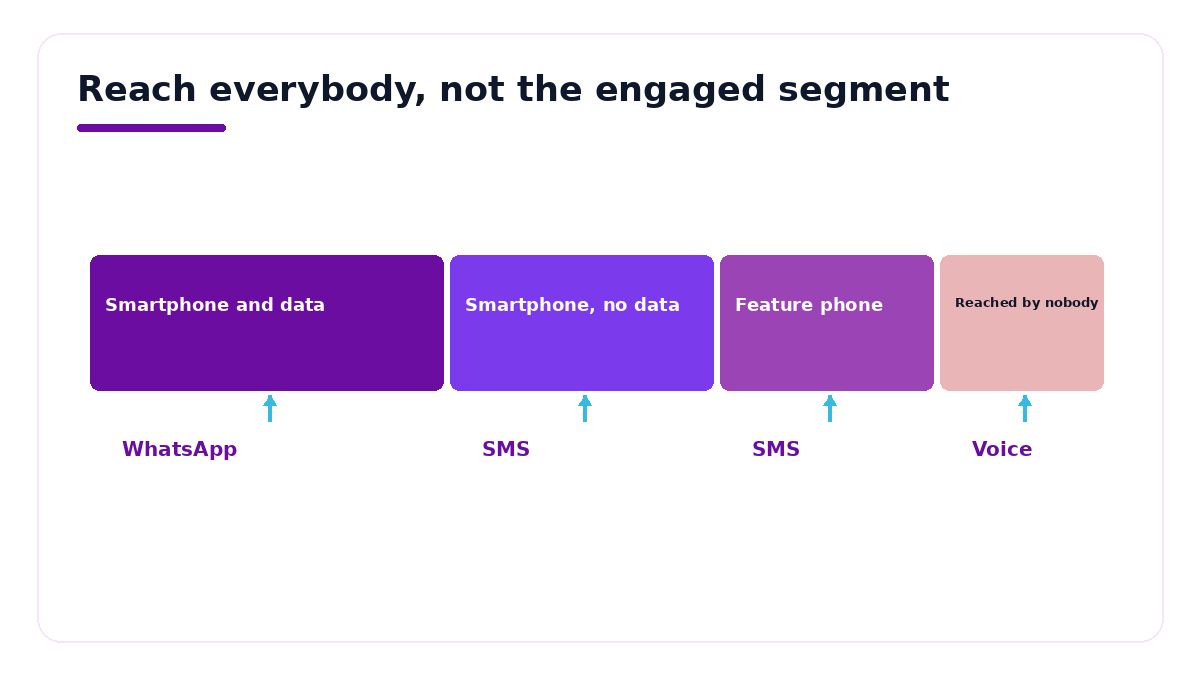
Table of Contents
What a citizen messaging platform has to do that a marketing tool does not
Why grievance tracking decides how a citizen messaging platform is judged
What a citizen messaging platform has to do that a marketing tool does not
Reach everybody, not the engaged segment. A marketing platform optimises for the people most likely to respond. A citizen messaging platform has to reach the people least likely to, because those are usually the people the scheme exists for.
That single difference changes the channel mix, the language requirement, the reporting and the procurement criteria.
Celitix runs messaging for RIICO, the National Health Mission, Jaipur Nagar Nigam and the Airports Authority of India, so the patterns here come from live government deployments rather than a commercial template relabelled.
Why g2c communication india cannot be WhatsApp only
Because smartphone and data access are not universal, and the citizens least likely to have both are often the ones a scheme most needs to reach.
Effective g2c communication india runs SMS as the floor, WhatsApp where it is available, and voice for the segment that neither reaches. Treating any one of those as the whole answer leaves a measurable share of the population out.
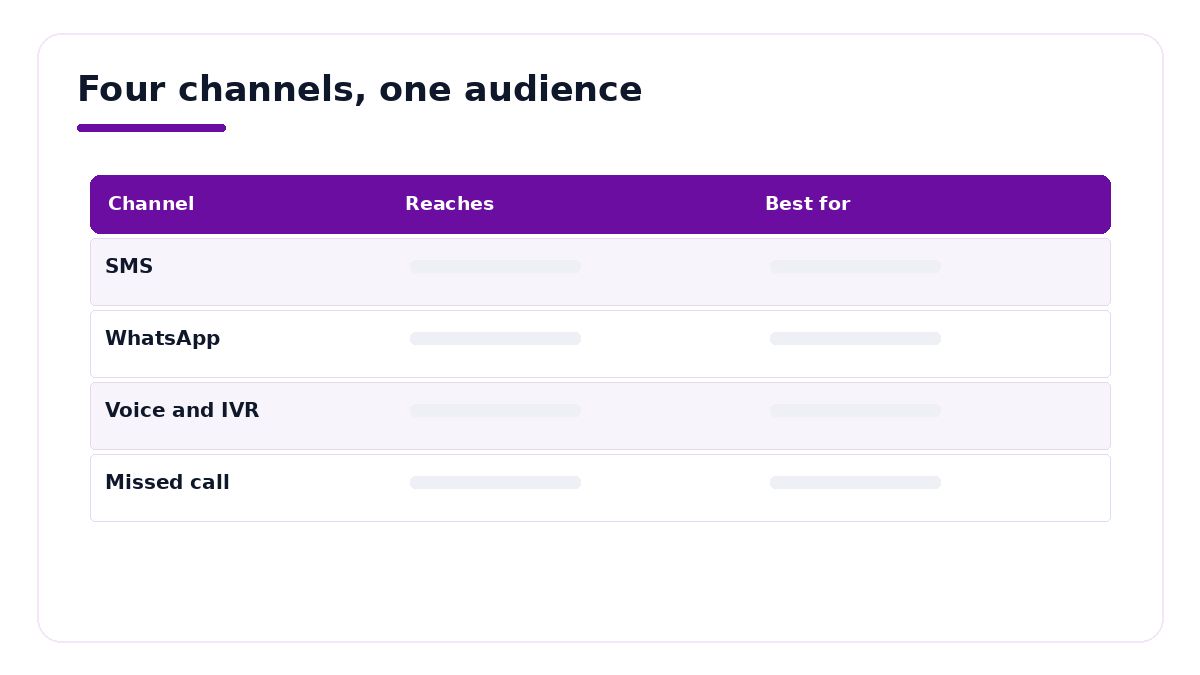
Channel | Reaches | Best for |
|---|---|---|
SMS | Every handset | Alerts, deadlines, confirmations |
Smartphone with data | Documents, forms, two-way queries | |
Voice / IVR | Every handset, no literacy requirement | Low-literacy audiences |
Missed call | Every handset, free to the citizen | Opt-in and information request |
The fourth row is the one commercial platforms forget. A missed call costs the citizen nothing, which matters when the audience is price-sensitive and the alternative is a paid call to a helpline.
SMS marketing, WhatsApp Business API, missed call services and inbound dialer cover each leg.
What a citizen messaging platform must get right on alerts
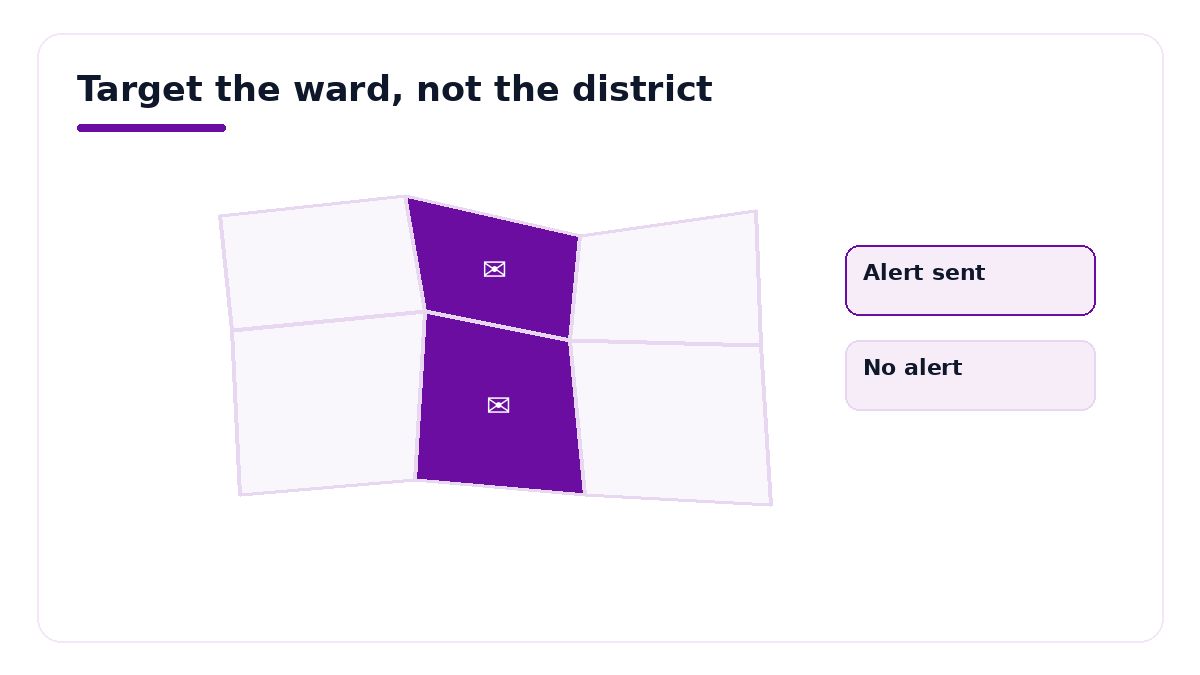
Timing and precision. Government alert messaging is judged on whether the right people received the right instruction in time, and a message that reaches everyone about something affecting one ward trains people to ignore the next one.
Geography. Ward or pincode level targeting, not a district-wide broadcast
Language. The state language first, with Hindi and English alongside
One instruction. What to do, not a paragraph of context
A verifiable source. So citizens can confirm it is genuine
A fallback channel. For the segment the first channel did not reach
The fourth deserves attention. Impersonation of government messaging is common, so a citizen messaging platform should make verification easy, through a registered sender identity and a published number citizens can check against.
Verified sender identity is covered by the DLT registration process for SMS and by display name verification on WhatsApp.
Scheme enrolment and the documents problem
Most scheme friction is document collection. A citizen is told they qualify, then asked to visit an office with papers, and a share of them never do.
A two-way channel changes that. Documents can be sent as images in the thread, checked, and queried back, without a trip. This is where WhatsApp earns its place in g2c communication india despite the reach limitation.
Build the rejection path as carefully as the acceptance one. A citizen whose document was unreadable needs to be told which document and why, in their language, with a way to send it again.
Set retention deliberately, because these threads contain identity documents. That is a different retention question from a marketing conversation and should be answered separately.
Why grievance tracking decides how a citizen messaging platform is judged
A grievance that disappears into a portal is the single most common complaint about digital government services. Tracking in a thread fixes it cheaply.
Acknowledge on receipt with a reference, confirm when it moves to a department, and confirm when it closes. Three messages, and the perception of the service changes more than it does from any portal redesign.
Allow a reply at each stage. A citizen messaging platform that broadcasts status but cannot accept a correction is a notification system, not a grievance channel.
WhatsApp live chat and live chat services cover how those threads are routed to the right department without exposing the whole queue.
Procurement questions worth asking
Government procurement for government alert messaging asks different questions from a commercial buy, and the ones below are where proposals usually differ most.
Where does the data sit. Region, and whether it can be contractually pinned
Who can access it. Named roles with an access log you can audit
What is the retention. Separately for messages, media and identity documents
What is the reach evidence. Delivery by channel, not just sends
What happens at exit. Export format and deletion certificate
What is the surge capacity. Because a civic emergency is not an average day
The last one is specific to this sector. A platform sized for routine volume will fail on the day it matters most, and surge behaviour should be stated in the contract rather than assumed.
Retention and consent for a citizen messaging platform should be read alongside the current framework published by the Ministry of Electronics and Information Technology.
How to measure whether it worked
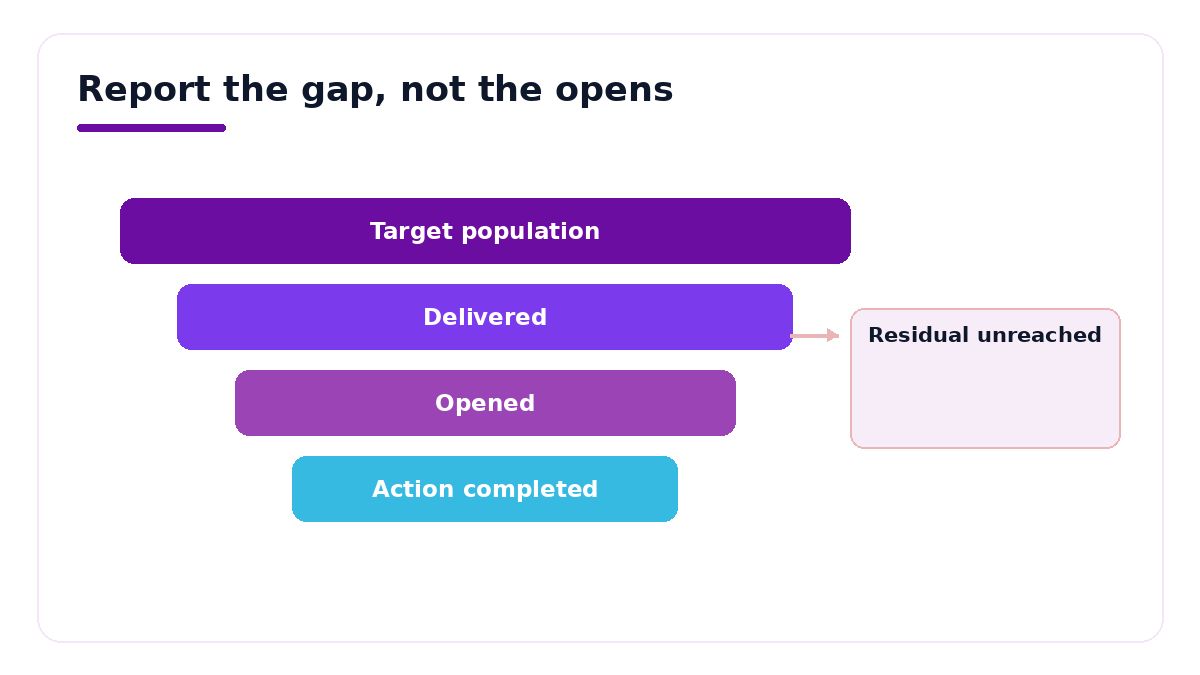
Not open rate. The measure for government alert messaging is whether the intended action happened, and the reporting has to connect the message to that outcome.
Reach by channel. Delivered, per channel, per ward
Residual unreached. The share no channel reached, which is the real gap
Action completion. Enrolments, bookings or confirmations attributable to the send
Grievances raised. Which rises when a message is unclear
Language split. Completion by language, which exposes translation problems
Residual unreached is the number worth reporting upward. Everything else flatters the programme, and that one tells you where to put the next channel.
Related: CPaaS solutions, WhatsApp campaign analytics, real time messaging analytics and integrations for connecting scheme databases.
For sector-adjacent patterns see healthcare and education and edtech, which share the reach and language constraints that make g2c communication india distinct.
Where to start with Celitix
Tell us the scheme and the ward list, and we will come back with the channel mix, the expected residual unreached share and the retention settings for identity documents, before any procurement conversation.
Ask for a reach and retention planCommon questions
Why can government messaging not just use WhatsApp?
Because smartphone and data access are not universal, and the citizens least likely to have both are often the ones a scheme most needs to reach. SMS is the floor, WhatsApp adds documents and two-way, and voice covers the rest.
How do citizens know a government message is genuine?
Through a registered sender identity and a published number they can check against. Impersonation of government messaging is common, so verification has to be easy rather than assumed.
What makes scheme enrolment fail?
Document collection. A citizen is told they qualify, then asked to visit an office with papers, and a share never do. A two-way channel lets documents be sent, checked and queried without the trip.
What should a grievance thread contain?
Three messages: an acknowledgement with a reference, a confirmation when it reaches a department, and a confirmation when it closes. Allow a reply at each stage, or it is a notification system rather than a grievance channel.
What is the most important metric?
Residual unreached, the share of the target population that no channel reached. Everything else flatters the programme, and that number tells you where the next channel has to go.