Lead generation chatbot, three jobs and the fourth to avoid
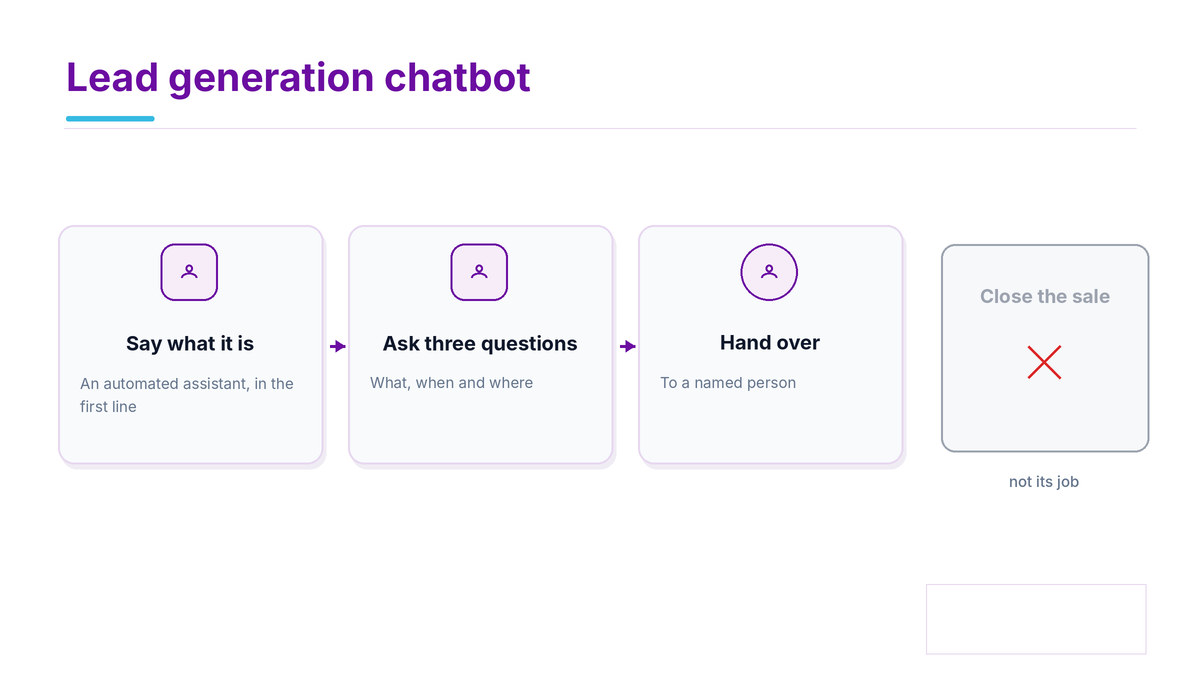
Table of Contents
A lead generation chatbot has three jobs
Greet the person and say plainly what it is. Ask three questions. Hand over to a human. That is the whole brief.
The trouble starts when a lead generation chatbot is given a fourth job, which is closing the sale. It cannot, and attempting it is what makes people leave.
Say it is a bot
Not a disclaimer, a first line. People work it out within two messages anyway, and the ones who feel misled stop answering. A lead generation chatbot that opens with "I am an automated assistant, I will get you to the right person in three questions" outperforms one pretending to be Priya from sales.
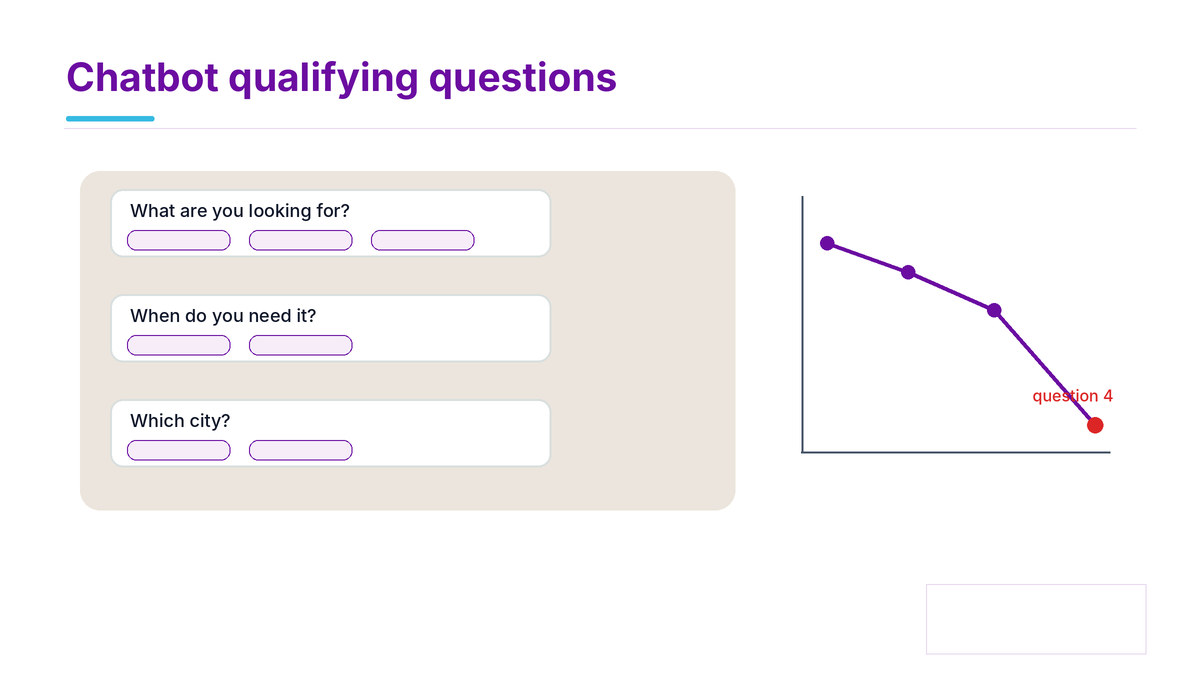
Chatbot qualifying questions
Three, asked as buttons wherever the answer is finite.
What are you looking for? Decides who the lead goes to
When do you need it? Separates this month from someday
Where are you? Matters for service areas, stock and language
Drop off rises sharply at the fourth question. If you want a fifth answer, get it from the salesperson on the call, not from the chatbot qualifying questions. The person has already given you enough to route them.
Buttons rather than free text for all three. Free text means you then have to parse "sometime soon maybe" into a timeline, and the parsing is where a lead generation chatbot starts getting things wrong.
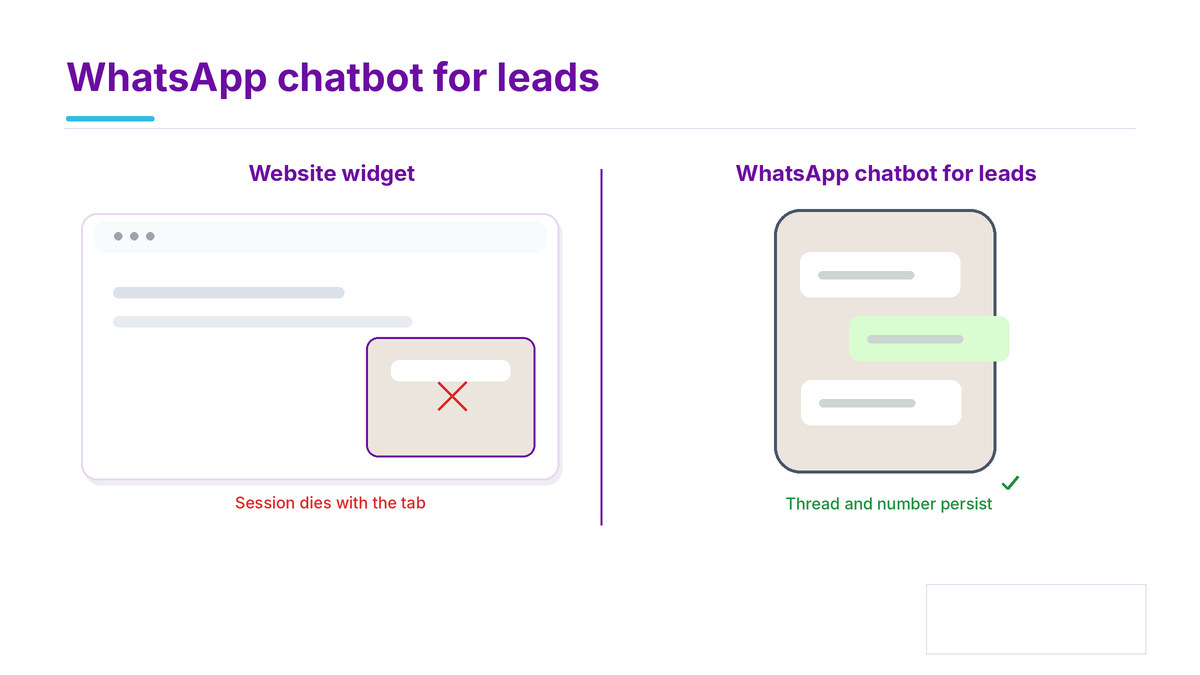
WhatsApp chatbot for leads, or a website widget
Website widget | WhatsApp chatbot for leads | |
|---|---|---|
Survives the tab closing | No | Yes |
You keep a contact | Only if they typed it | Yes, the number |
You can follow up later | No | Yes, with a template |
Works from an ad | Needs a landing page | Directly |
Needs approval to set up | No | Yes, business verification |
The first row decides it for most businesses. A website session dies with the tab, so a half finished conversation is simply lost. A WhatsApp chatbot for leads leaves the thread sitting in the person's app, and you still have the number.
The cost of following up later is in our WhatsApp API conversation pricing guide, and the entry points in the WhatsApp lead generation tool guide.
One constraint to design around. A WhatsApp chatbot for leads needs business verification before it can run on a live number, and the steps are set out in Meta's Cloud API documentation. Budget a week for it rather than discovering it on launch day.
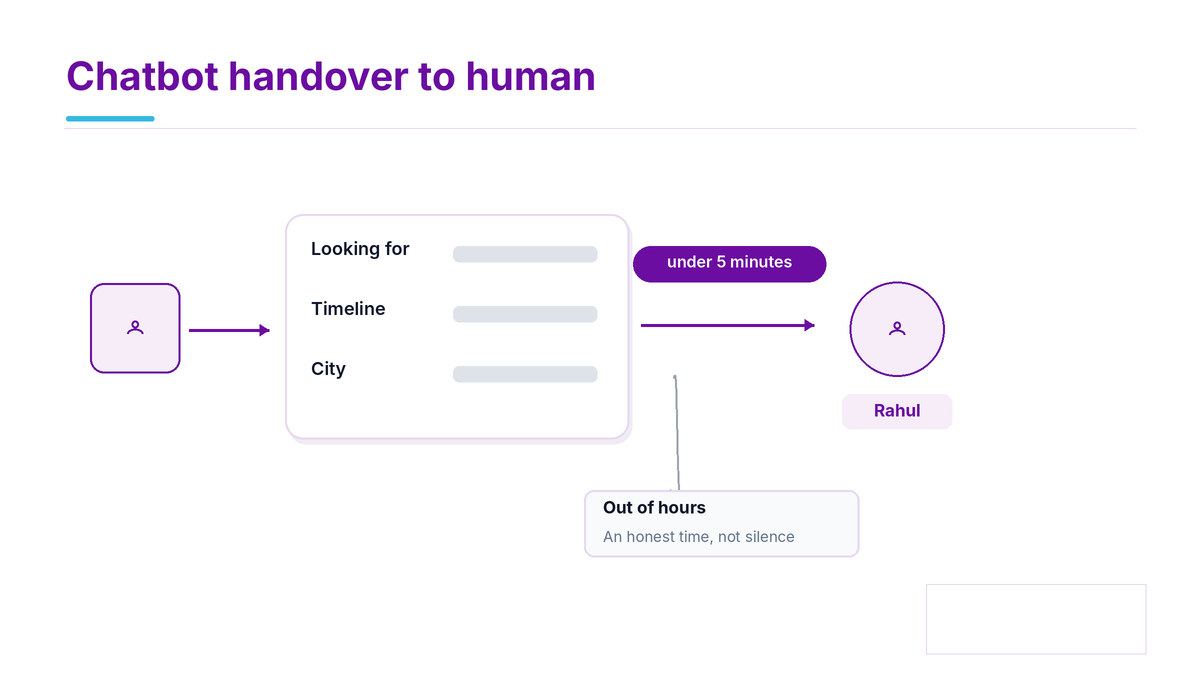
Chatbot handover to human
This is the part that gets built last and matters most.
Pass the answers across. The salesperson should open the chat already knowing what, when and where
Name the person. "Rahul will reply shortly" beats "an agent will assist you"
Set a real expectation. Under five minutes in hours, and an honest time out of hours
Let the person skip the bot. Anyone typing "talk to a human" should get one, immediately
That last rule costs you some qualification data and buys you the leads who would otherwise have left. A lead generation chatbot that traps people in a loop is worse than no chatbot, because the person now associates the annoyance with your brand.
Whether to staff this with people or automation at all is covered in chatbot against support agent.
What happens at 11pm
The chatbot still qualifies, then says when someone will reply and means it. A holding message with a real time keeps the lead. Silence, or a promise of an immediate reply that does not come, does not. See WhatsApp business auto reply.
Chatbot lead capture rate
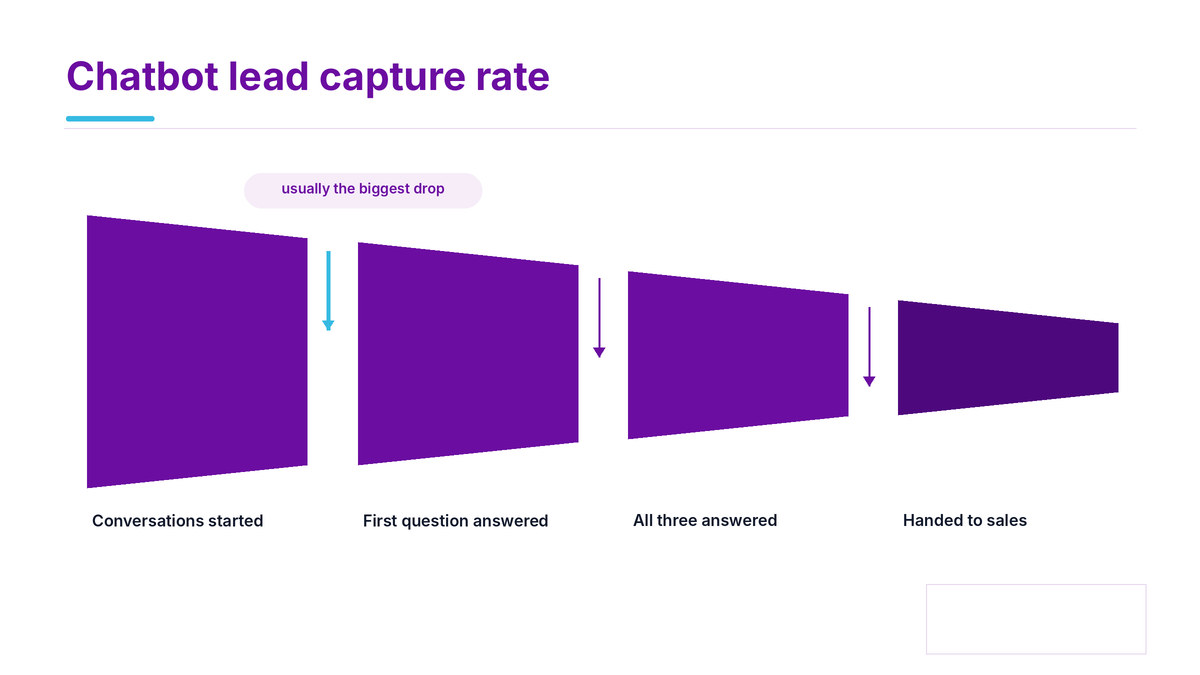
One number tells you nothing. Four tell you where people leave.
Conversations started. How many people opened it at all
First question answered. Usually the biggest drop, and usually an opening line problem
All three answered. If this falls off a cliff, your questions are too many or too nosy
Handed to sales. The only one that matters commercially
Track the step to step drop, not the end to end figure. A chatbot lead capture rate of thirty percent could be a brilliant bot with a bad opening line or a poor bot that only serious people reach, and the overall number cannot tell those apart.
The measurement side across channels is in our WhatsApp campaign analytics guide.
Where a lead generation chatbot goes wrong
Pretending to be a person. Costs you the sceptical, who are often the serious ones
Too many questions. Four is already one too many
No escape hatch. Trapping someone who asked for a human
Handover with no context. The salesperson asks the same three questions again
Trying to close. It is a receptionist, not a closer
Common questions
How many questions should a lead generation chatbot ask?
Should a lead generation chatbot say it is a bot?
Is a WhatsApp chatbot for leads better than a website widget?
What should a chatbot handover to human include?
How should chatbot lead capture rate be measured?
Where to start with Celitix
Celitix builds the three question flow, passes the answers into the handover, and reports all four steps rather than one headline figure.
Ask Celitix to map your three questions