Feedback collection WhatsApp, one question and a branch

Table of Contents
Feedback collection WhatsApp means one question, asked immediately
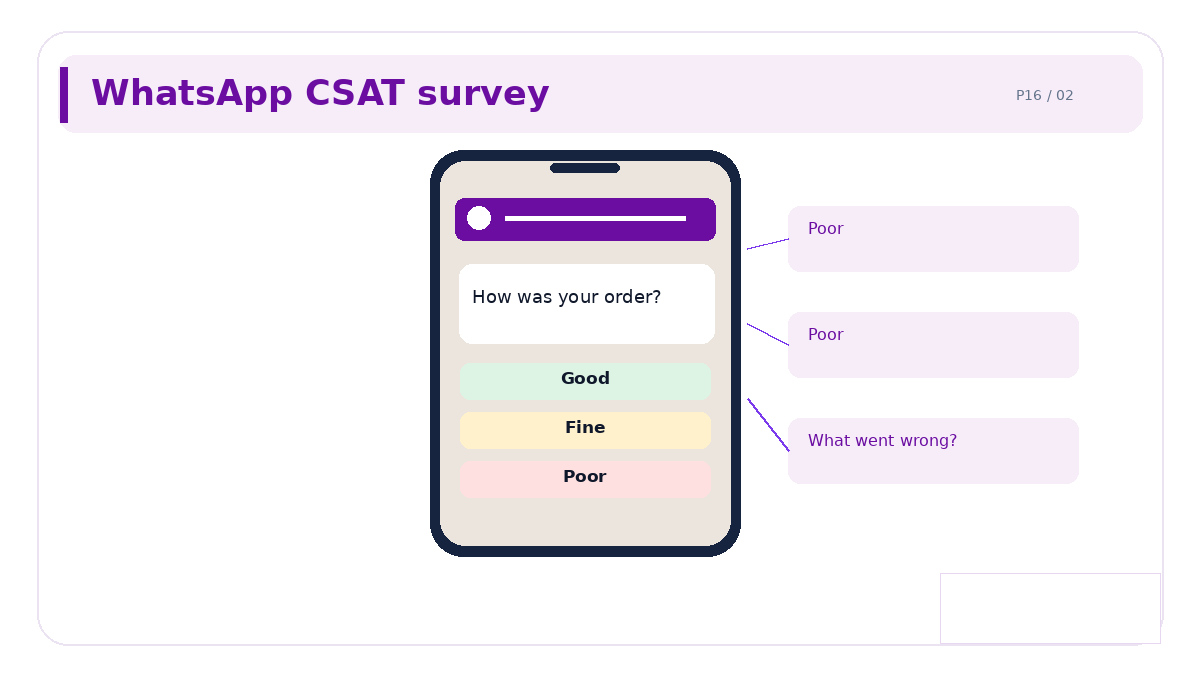
WhatsApp csat survey, the format feedback collection WhatsApp should use
Why feedback collection WhatsApp beats an email survey
Not because the question is better. Because it arrives in the thread where the interaction already happened, and answering is a tap rather than opening a browser and reading a form.
The practical difference is that you get an answer from people who would never have opened the email, which changes who your feedback represents. An email survey is answered mostly by the delighted and the furious.
Feedback collection WhatsApp means one question, asked immediately
Timing matters more than wording. Send it when the thing just happened, in the same conversation, while the detail is still fresh.
After delivery, not a week later. A week later they are rating their memory
After a support conversation closes, in the same thread
One question, as buttons. Not a link, not a form, not a scale with eleven points
Branch on the answer, which is the whole value of doing this in a chat
Whether the message is billable depends on category. A rating request tied to a transaction the customer just completed is a utility message, and the split is in WhatsApp API conversation pricing.
WhatsApp csat survey, the format feedback collection WhatsApp should use
Three buttons, and a conditional follow up only where the answer warrants one. This is the format that fits the channel.
Three options, clearly worded. Good, fine, poor beats a numbered scale
No follow up on a positive answer. Let them go, they are happy
One follow up on a negative answer, asking what went wrong, with options not free text
Route the negative answers to a person the same day, because that is the recovery
The third rule is where feedback collection WhatsApp earns its cost. A customer who tells you privately that something was wrong is a customer you can keep, and the alternative is a public review you cannot answer.
WhatsApp nps survey, and why it fits badly
Worth saying plainly, because clients ask for it by name. The standard eleven point scale does not fit a chat bubble.
Buttons are limited, eleven options will not render as taps, and asking someone to type a number from zero to ten converts far worse than three buttons. You can run a WhatsApp nps survey, but you will be trading response rate for a metric your board recognises.
If you need comparable NPS, accept the lower response rate and know the sample is skewed
If you need to know what to fix, use three buttons and a branch instead
Do not run both on the same customers, because you will be asking twice about one experience
The honest recommendation is three buttons for operations and a quarterly NPS by a channel built for it, rather than forcing one metric into a format that resists it.
WhatsApp review request message
The one part of this that is genuinely promotional, and it should only ever follow a positive answer.
Gating the request behind a good rating is not gaming the reviews. It is asking the people who are pleased, and sending every customer to a public review page regardless of what they just told you privately is how a feedback programme produces one star reviews at scale.
Only after a positive rating, never unconditionally
One ask, with a direct link to the platform you actually care about
Never offer anything in exchange, which most review platforms prohibit and which invalidates the review
Do not chase. If they did not leave one, that is the answer
The incentive rule matters more than people expect. An offer attached to a WhatsApp review request message can get reviews removed in bulk and the business penalised, which costs more than the reviews were worth. Google's review policy is explicit about it, and most other platforms take the same line.
WhatsApp feedback form flow
Two steps. The rating, and at most one follow up.
Drop off rises sharply at a third question, the same pattern as any chat flow. If you need more than two steps, you are running a research project rather than feedback collection WhatsApp, and that belongs in a tool built for it.
Step one is the rating, always as buttons
Step two is conditional, and only on a negative or neutral answer
Nothing is mandatory. A customer who stops after step one has still told you something useful
Acknowledge the answer, so the thread closes rather than going quiet
The flow design discipline is the same as in lead generation chatbot, and how this fits the wider post purchase sequence is in customer retention campaigns.
What to measure on feedback collection WhatsApp
Response rate, which should be several times your email survey rate or something is wrong
The split across the three options, tracked weekly rather than averaged
Time from a negative answer to a human reply, which is the operational number
Reviews received per positive rating, to see whether the gate is working
The third is the one to put on a dashboard. A feedback programme that collects complaints and routes them nowhere is worse than not asking, because the customer told you and nothing happened.
Common questions
Why use feedback collection WhatsApp over email?
What format should a WhatsApp csat survey use?
Can I run a WhatsApp nps survey?
When should a WhatsApp review request message go out?
How long should a WhatsApp feedback form flow be?
Where to start with Celitix
Celitix sends the rating in the same thread as the order, gates the review request behind a positive answer, and routes negatives to a named person the same day.
Ask Celitix to set up your rating flow