Rcs messaging for marketing, what it adds and the constraint first
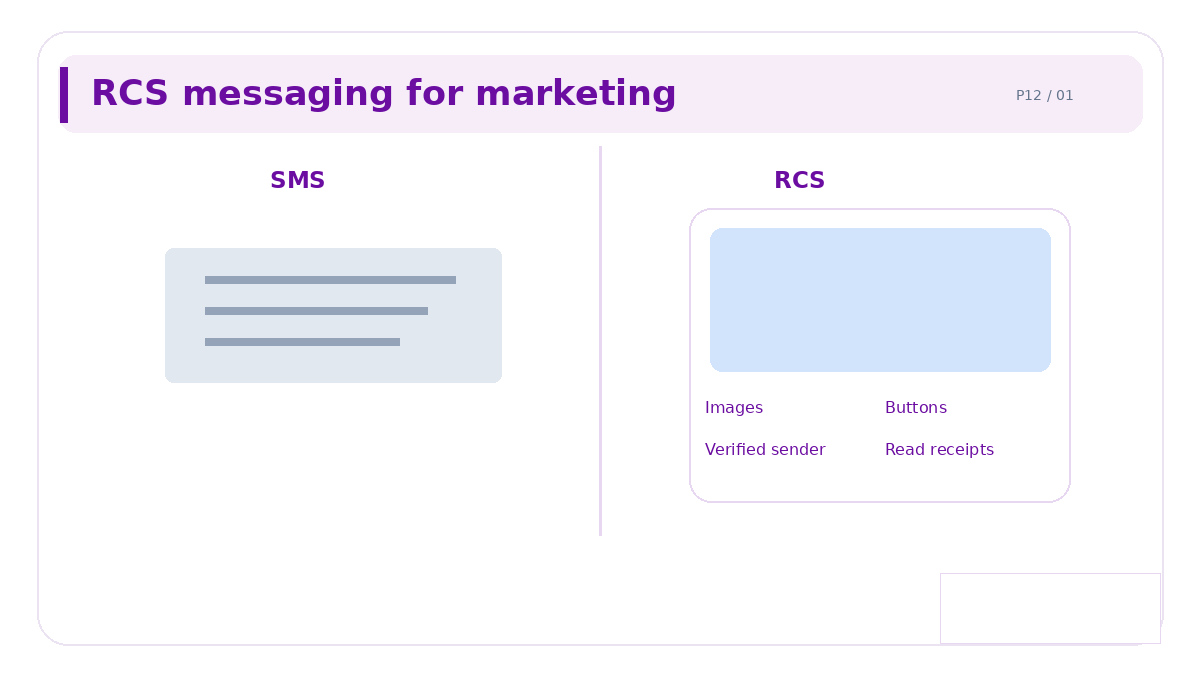
Table of Contents
What rcs messaging for marketing adds over SMS
Four things, and they are worth naming precisely because the channel gets described vaguely as richer SMS.
Images and cards, so a product can be seen rather than described
Buttons, so the next step is a tap rather than a link to copy
A verified sender, with your brand name and logo rather than a six character header
Read receipts, which SMS has never had
The third is underrated. A verified sender in the default messaging app, with your real name on it, does more for a promotional message's credibility than any amount of copywriting.
The constraint on rcs messaging for marketing, stated first
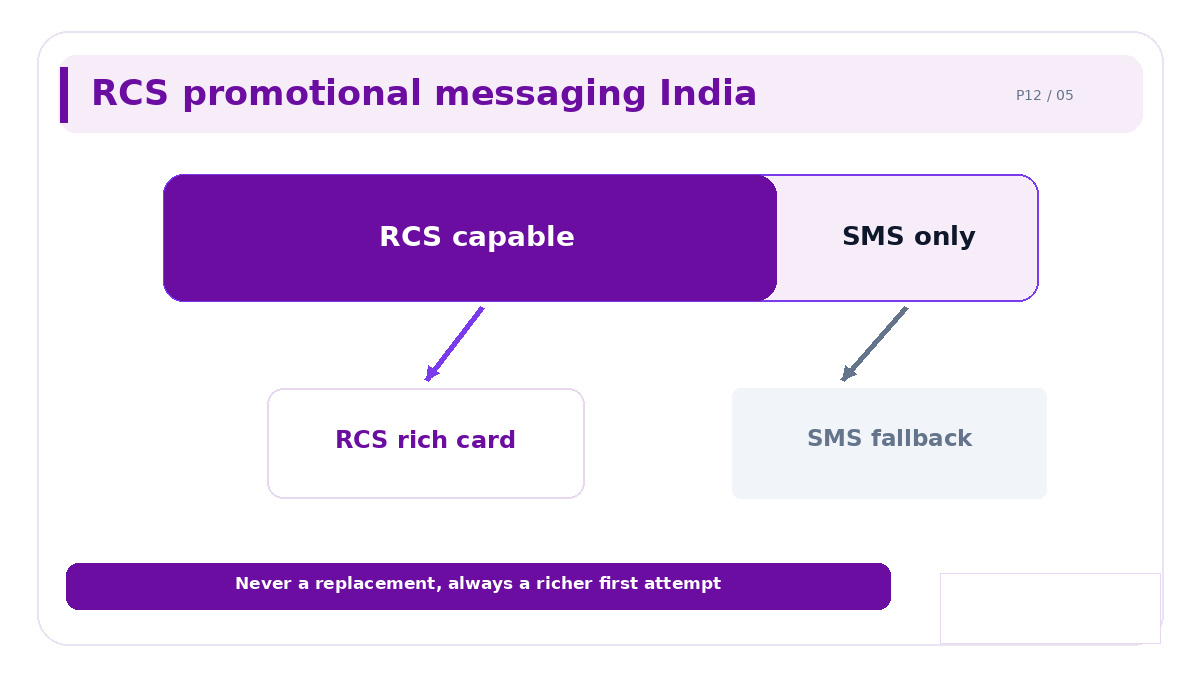
RCS only reaches handsets and carriers that support it. In practice that means most modern Android devices in India, and a meaningful minority who will not receive it at all.
So rcs messaging for marketing is never a replacement for SMS. It is a richer first attempt with an SMS fallback behind it, and any provider who describes it without mentioning the fallback is describing half a channel. Google documents the capability check in its RCS Business Messaging documentation.
What to ask your provider
Whether they run a capability check before sending, and whether the fallback is automatic. If you have to split the list yourself, the operational cost of this channel just doubled. Our RCS messaging use cases guide covers the non marketing side.
Rcs rich card campaign, where rcs messaging for marketing should start
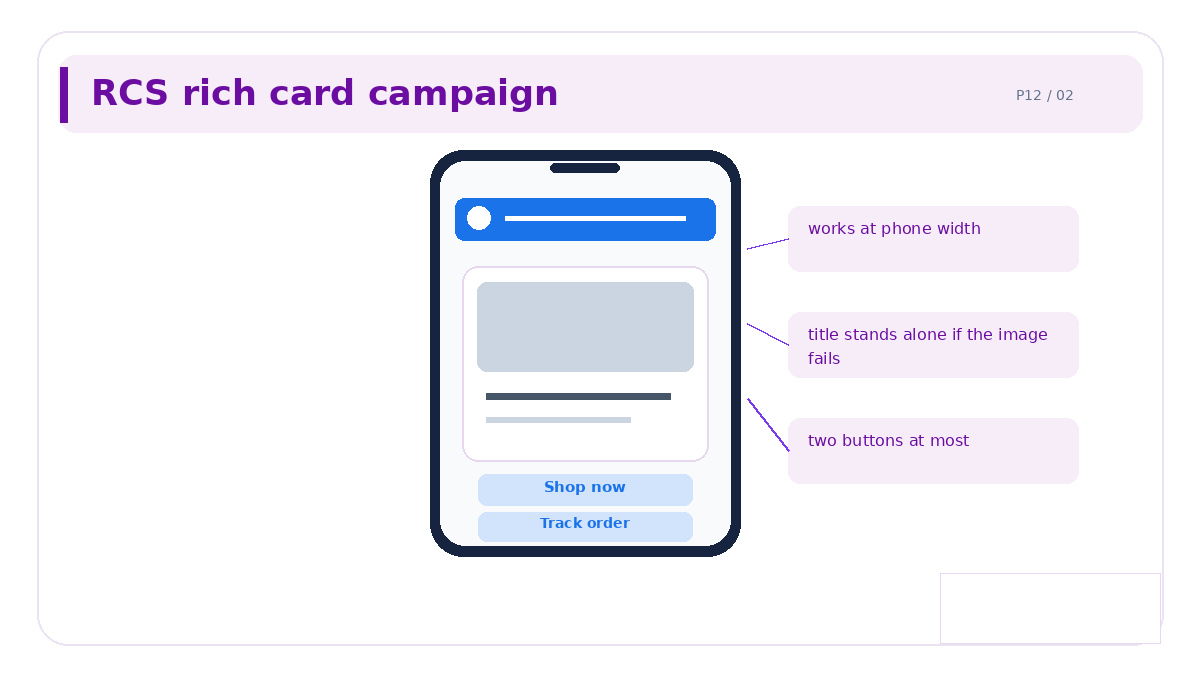
One image, a short title, a line of description, two buttons. That is where almost every campaign on this channel should start.
One image that works small. It renders at phone width, so a busy composition is wasted
A title that stands alone, because the image may not load on a slow connection
Two buttons at most. One primary action and one secondary
A button label that says the outcome, such as Track order rather than Click here
The single card outperforms the carousel on a single offer, because a carousel asks the reader to browse and a single offer gives them nothing to compare. Most rcs messaging for marketing never needs the other format at all.
Rcs carousel message marketing, and when not to use it
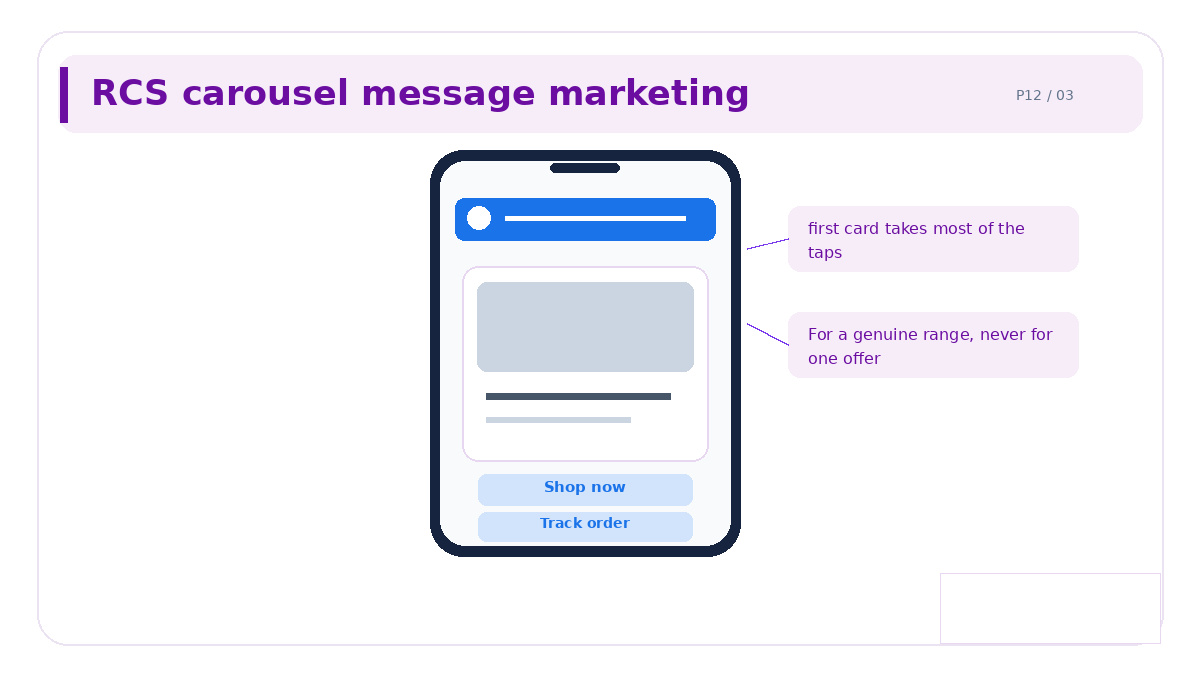
The multi card format, and it has one correct use: a genuine range the reader would want to choose between.
Three to five cards. Beyond that nobody scrolls
Genuinely different options, not the same product in four colours
A button on every card, so any card can be acted on
Order them deliberately, because the first card gets most of the taps
Using rcs carousel message marketing for a single discount is the common mistake. The format signals choice, so a reader who scrolls and finds four versions of one message learns to ignore the next one.
Measure the cards separately
Tap rate per card position tells you whether the ordering is right. If card one takes nearly everything, the carousel is doing no work and a rich card would have been cheaper.
Rcs marketing campaign examples that work
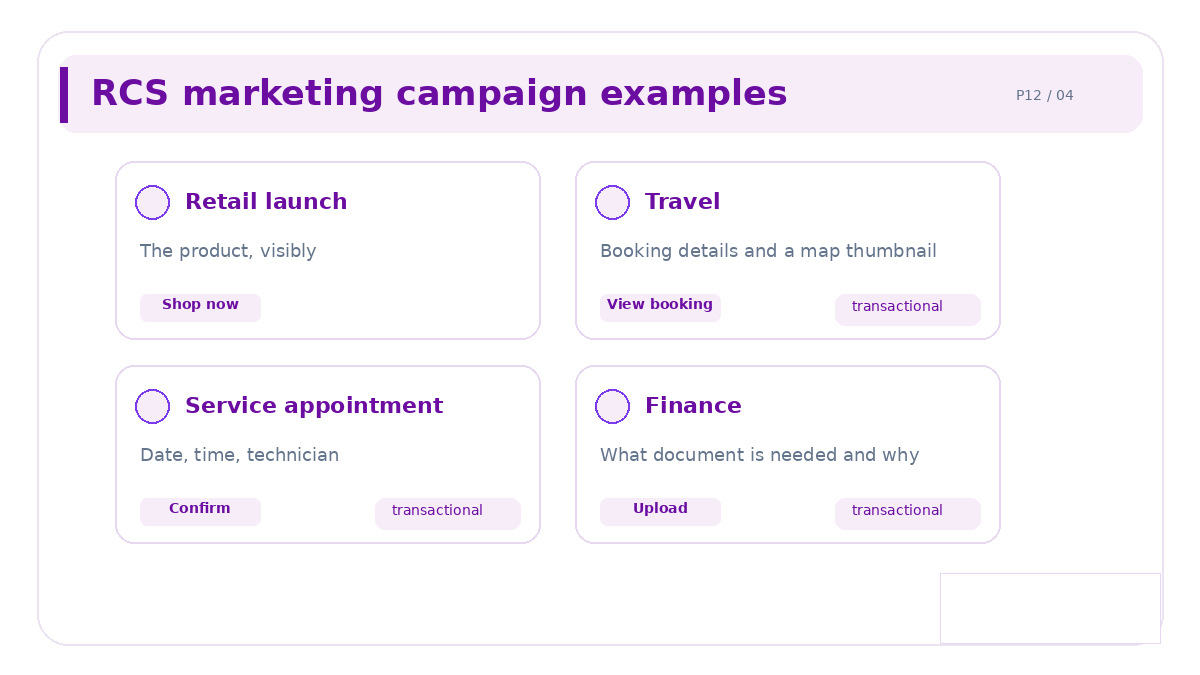
Four sectors where the format earns its cost, and they share one trait: the message carries something a text line cannot.
Sector | What the card carries | The button |
|---|---|---|
Retail launch | The product, visibly | Shop now |
Travel | Booking details and a map thumbnail | View booking |
Service appointment | Date, time, technician | Confirm or reschedule |
Finance | What document is needed and why | Upload |
Notice that three of the four are not promotional at all, which is the most useful thing to know about rcs messaging for marketing. The strongest results on this channel come from transactional messages made easier to act on, which is also where the consent position is simplest.
Rcs promotional messaging india, and the rules
Promotional traffic carries the same consent and scrubbing obligations as SMS, because it is reaching the same subscriber under the same regulator.
Consent is required for promotional sends, and the record has to exist before the campaign
DND scrubbing applies to promotional categories, as it does on SMS
Sender registration is a prerequisite, and it is a brand verification rather than a header
An opt out route has to be present and has to work
TRAI sets the framework, and the registration mechanics mirror the SMS side covered in DLT registration process India.
Budget time for sender verification rather than treating it as a form. It is the same kind of brand check as a WhatsApp display name, and it fails for the same reasons, usually a trading name that does not match the registered entity.
Common questions
Is rcs messaging for marketing a replacement for SMS?
Should I use a rcs rich card campaign or a carousel?
How many cards in rcs carousel message marketing?
What are the best rcs marketing campaign examples?
What rules apply to rcs promotional messaging india?
Where to start with Celitix
Celitix runs the capability check and the SMS fallback automatically, so you send one campaign rather than splitting the list yourself.
Ask Celitix about RCS reach on your list