Communication api india, four channels and the three pricing lines
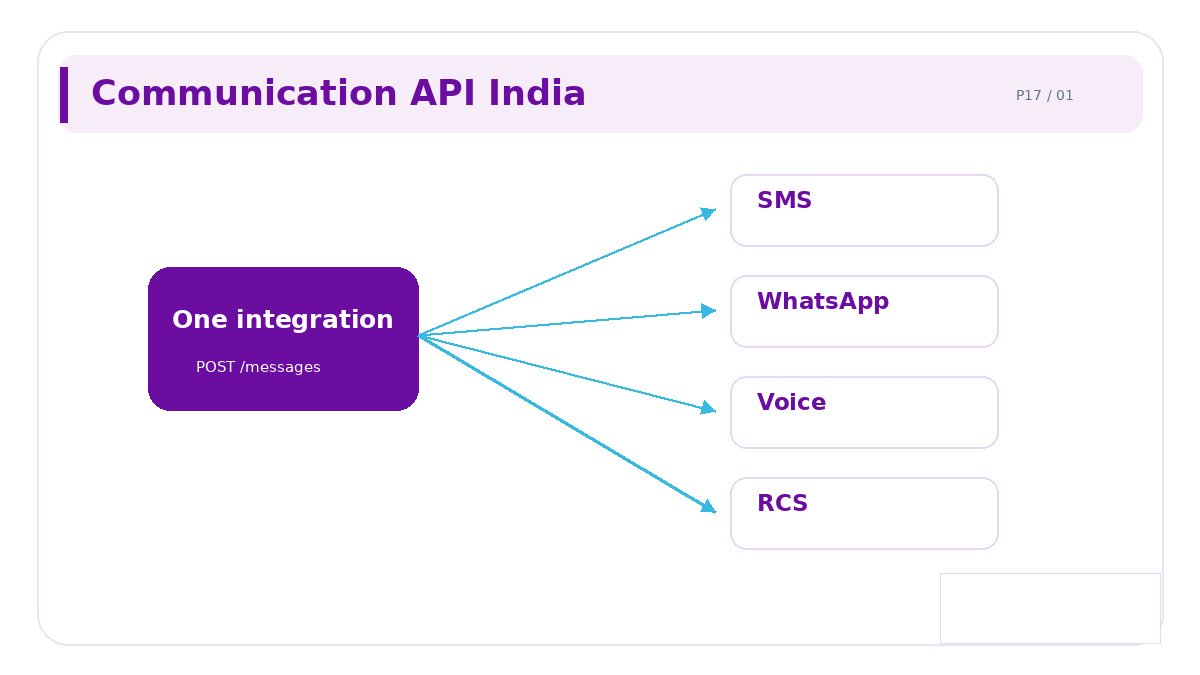
Table of Contents
Otp api india, where a communication api india is judged on latency
Voice api india, the stickiest part of a communication api india
What a communication api india actually covers
Four channels, behind one integration if you choose well. SMS, WhatsApp, voice and RCS. The useful question is not which provider has the longest channel list, but which channels you will genuinely use and how much work each one is to add later.
Most teams start with one channel and add a second within a year. That is the decision worth planning for, because adding a second provider is a second integration, a second invoice and a second contact list.
Otp api india, where a communication api india is judged on latency
This is usually the first channel a developer integrates and the one with the least tolerance for slowness.
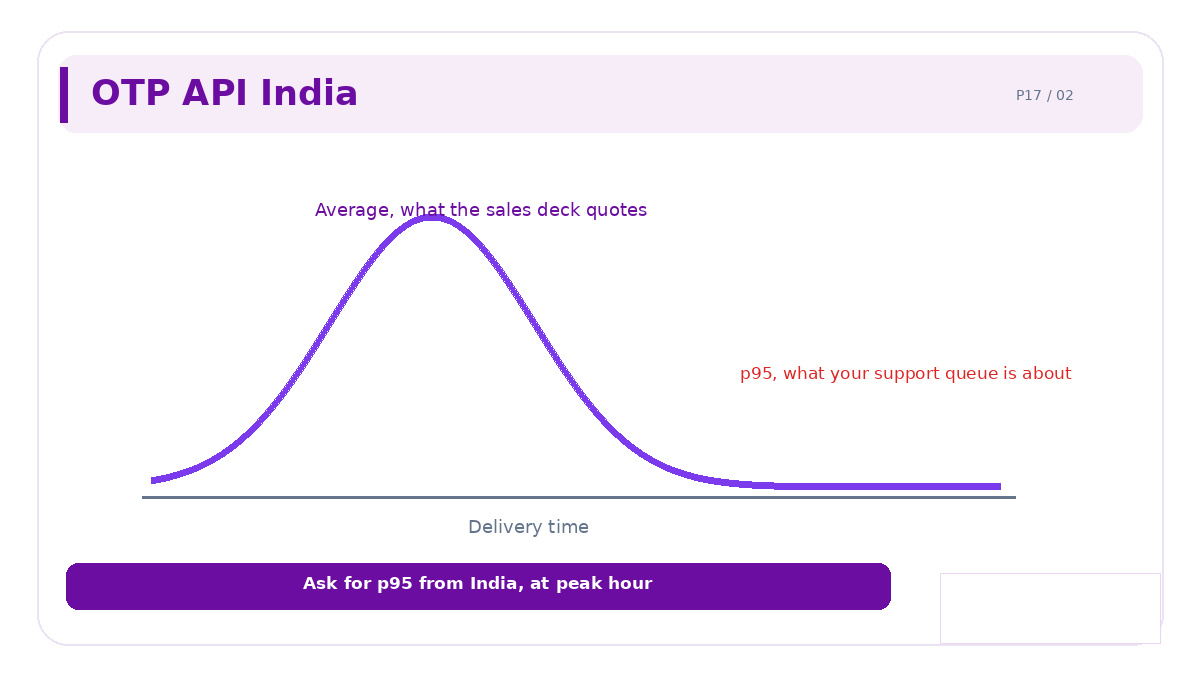
A code that arrives in two seconds and a code that arrives in forty are different products, and the average tells you nothing. Ask for the p95, measured from India, because the slowest tenth of your sends is what your support queue will be about.
Ask for p95 latency, not average, and ask what it is at peak hour
Insist on a voice fallback, because an SMS that does not arrive needs a second route
Check template handling, since a DLT template mismatch fails silently and looks like a network fault
Ask what happens past your daily limit, because silent queueing turns an OTP into a nine minute delay
The silent queueing question is the one that separates providers. The developer side of this is covered in the messaging API for developers India guide, and template registration in DLT registration process India.
Voice api india, the stickiest part of a communication api india
The stickiest piece of any communication api india, and worth understanding before you commit, because it is the hardest to migrate.
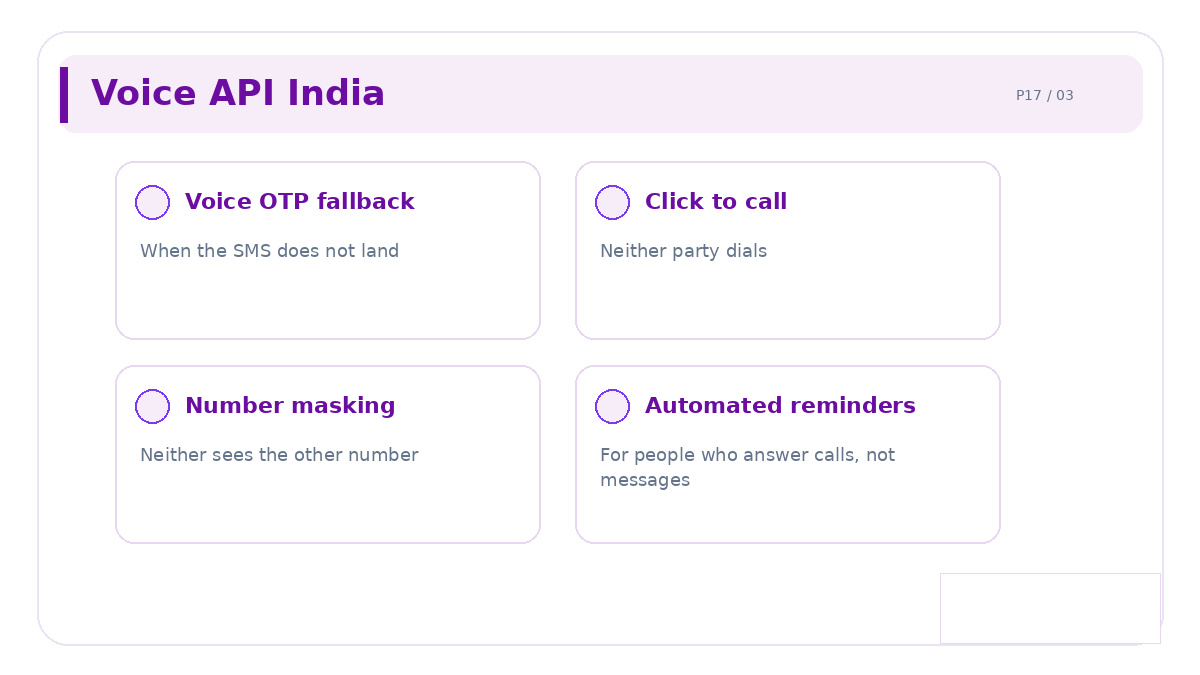
Voice OTP fallback, when the SMS does not land
Click to call, connecting a customer and an agent without either dialling
Number masking, where neither party sees the other's number
Automated reminders and confirmations, for audiences who answer calls but not messages
Stickiness cuts both ways. It is the channel that keeps your own clients from churning if you resell, and it is the channel that makes your own provider hard to leave. Ask about number portability before you publish any number, not after. Masking specifically is covered in number masking service India.
The allocation question
Indian numbers are allocated under rules from the Department of Telecommunications, so ask who holds the allocation for the numbers you use and what happens to them if you change provider.
Omnichannel api provider india
The phrase gets used for any provider with four channels on a pricing page. The thing that actually matters is whether the channels know about each other.
One omnichannel API | Four separate APIs | |
|---|---|---|
Integrations to build | One | Four |
Channel fallback | Built in, configured | Your own code |
Contact list | One | Four, drifting apart |
Reporting | One report | Four exports to reconcile |
Invoices | One | Four |
The second row is the real test. If an undelivered WhatsApp message can fall back to SMS without you writing the retry logic, that is genuine omnichannel. If not, you have bought four APIs with one login, which is a billing convenience rather than an architecture.
The channel comparison is in CPaaS against CCaaS and UCaaS.
Communication api pricing india
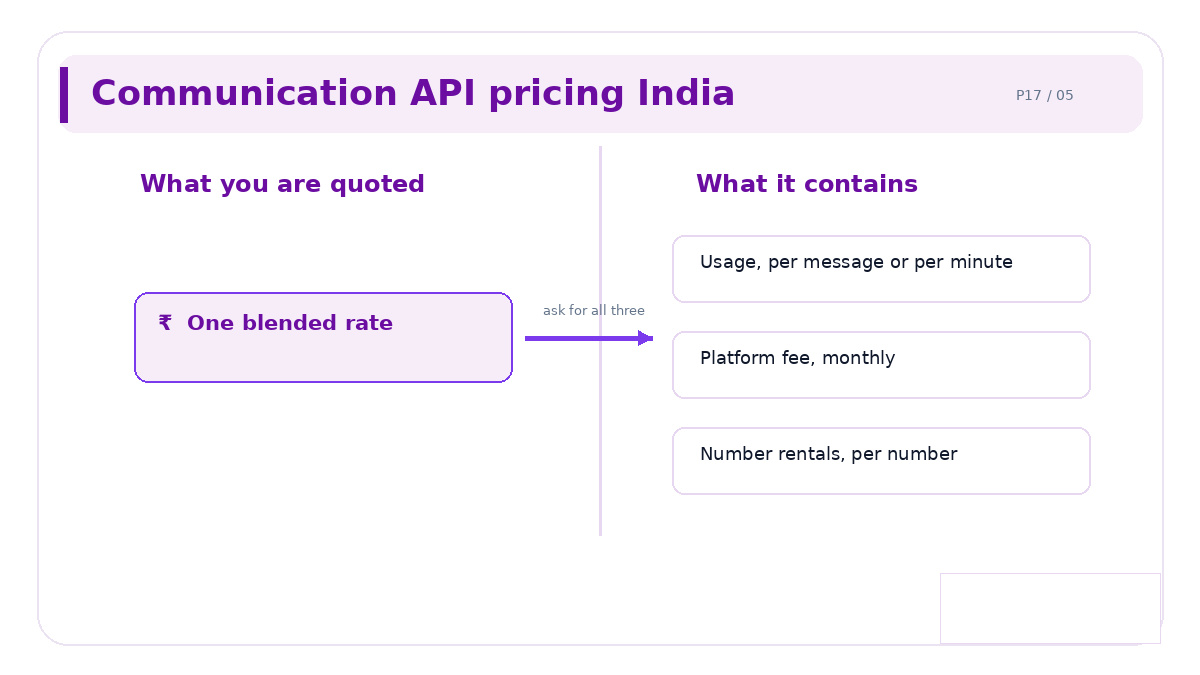
Three lines, and a single blended rate usually means two of them are hidden inside the first.
Usage. Per message on messaging, per minute on voice, billed per leg
Platform fee. Monthly, often per seat, and it does not move with volume
Number rentals. Per number per month, which adds up on a pool
Ask for all three separately. A provider quoting one figure per message has folded their platform cost into the rate, which means your cost per message does not fall as you grow and you cannot tell what you are actually paying for.
For WhatsApp specifically, read Meta's own published rates alongside any quote, because that part of a communication api pricing india proposal is a pass through with a markup on it. The categories are in WhatsApp API conversation pricing.
What to model
Your own volume at twelve months, not today. A rate card that looks competitive at a thousand messages a day and does not improve at fifty thousand is a rate card designed for a smaller customer than you intend to be.
What to check in a communication api india before you sign
p95 latency from India, at peak hour, for the channel you use most
Whether channel fallback is configuration or your own code
All three pricing lines, separately, in writing
Number portability if you leave
Whether the docs and a sandbox key are available without a sales call
The last one is the quickest filter. A communication api india that will not show you its documentation before a conversation has told you how the rest of the relationship will go.
Common questions
What should a communication api india include?
What matters most in an otp api india?
Why is a voice api india hard to replace?
What makes a real omnichannel api provider india?
How is communication api pricing india structured?
Where to start with Celitix
Celitix publishes its documentation without a login, quotes the three pricing lines separately, and treats channel fallback as configuration rather than something you build.
Ask Celitix for p95 latency figures