Gallabox alternative, the integration rework nobody scopes

Table of Contents
What I will not tell you
I work for Celitix. I am also not going to quote another company's prices or limits, because the only sources are rivals' comparison pages, which contradict each other and the vendors' own sites. The reasoning is in how to tell a review from a sales page.
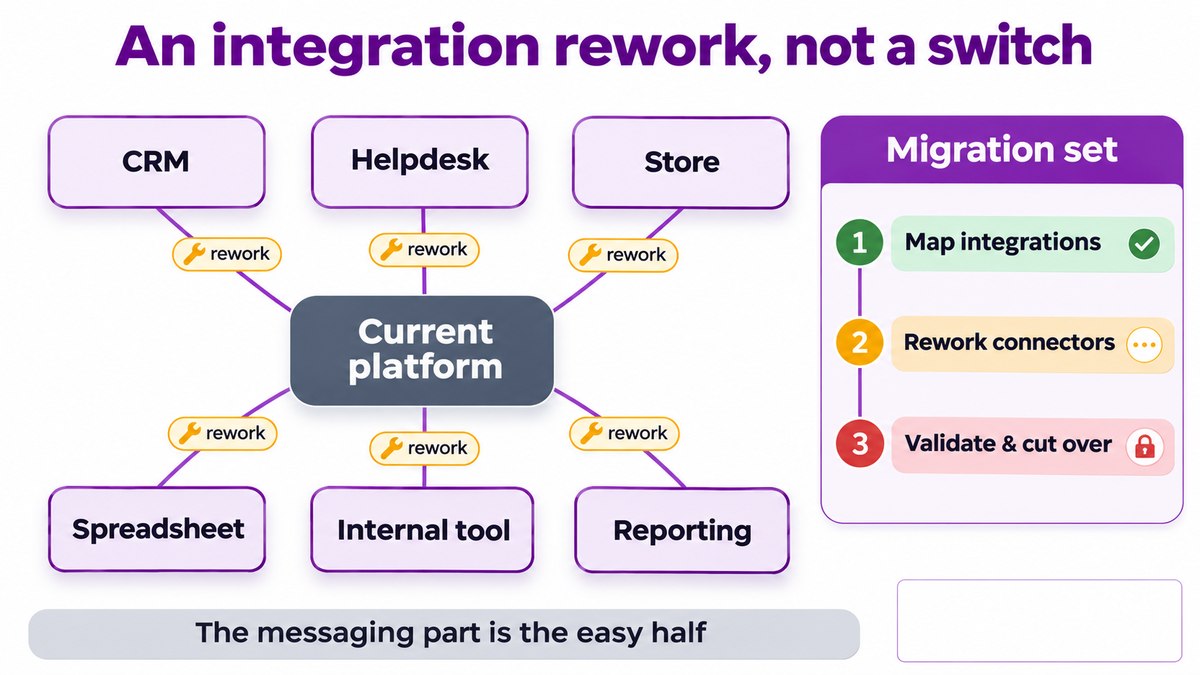
What this post covers is the part that makes an integrated migration different, which is everything you wired up over the last two years.
A gallabox alternative is an integration rework
If your messaging platform only sends messages, switching is the four step job in the migration post. If it is wired into your CRM, your helpdesk, your store and two spreadsheets, that is a different project.
Every connector points at the old platform. Each one has to be rebuilt, retested and re-authorised, and some of them were built by somebody who has left. That is the work, and it is why integration depth matters more than any feature when picking a gallabox alternative.
Before any gallabox alternative, build the inventory
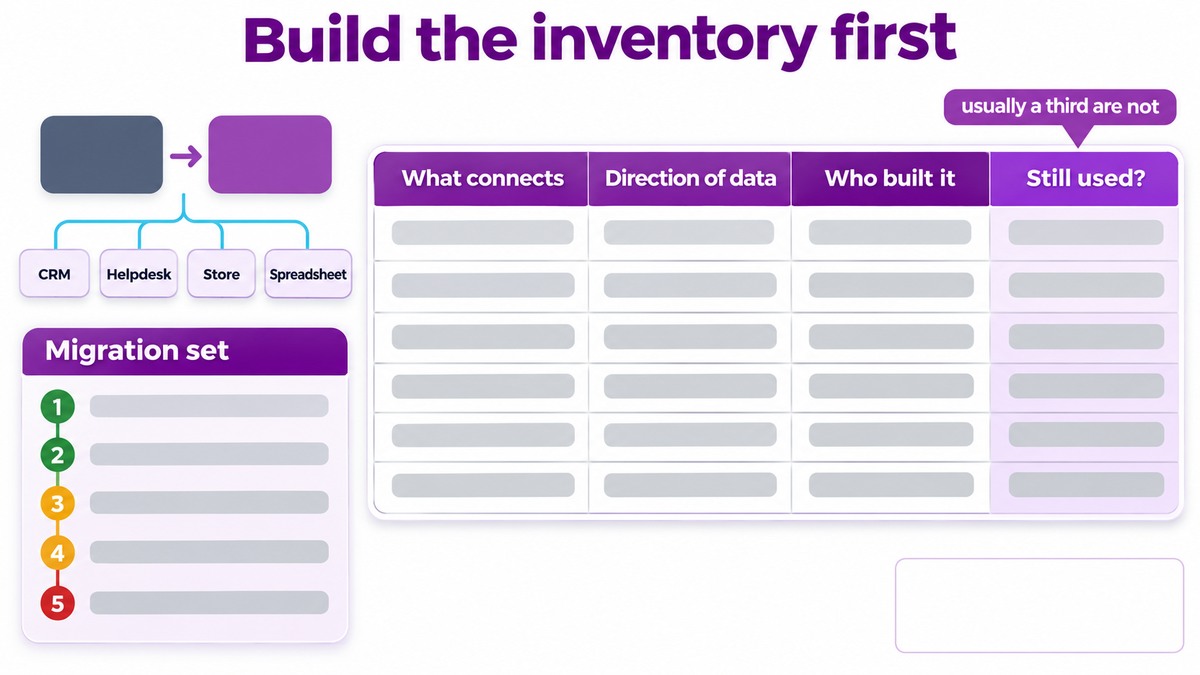
Four columns, one row per connector. Nothing else sizes the project.
Column | Why you need it |
|---|---|
What connects | CRM, helpdesk, store, sheet, internal tool |
Which direction data flows | Two way sync is several times the work of one way |
Who built it | You will need them, or their replacement |
Does it still get used | Usually a third of them do not |
That last column is where the good news is. A noticeable share of integrations in any mature setup are no longer used by anyone, and retiring them is free. Build the inventory before you switch from gallabox and the project often turns out smaller than feared.
The unowned integration
Every inventory turns up at least one connector that is live, used, and owned by nobody. That is the item to resolve first, because it will otherwise be discovered during the cutover by the team that depends on it.
Gallabox competitors, judge a gallabox alternative on depth not count
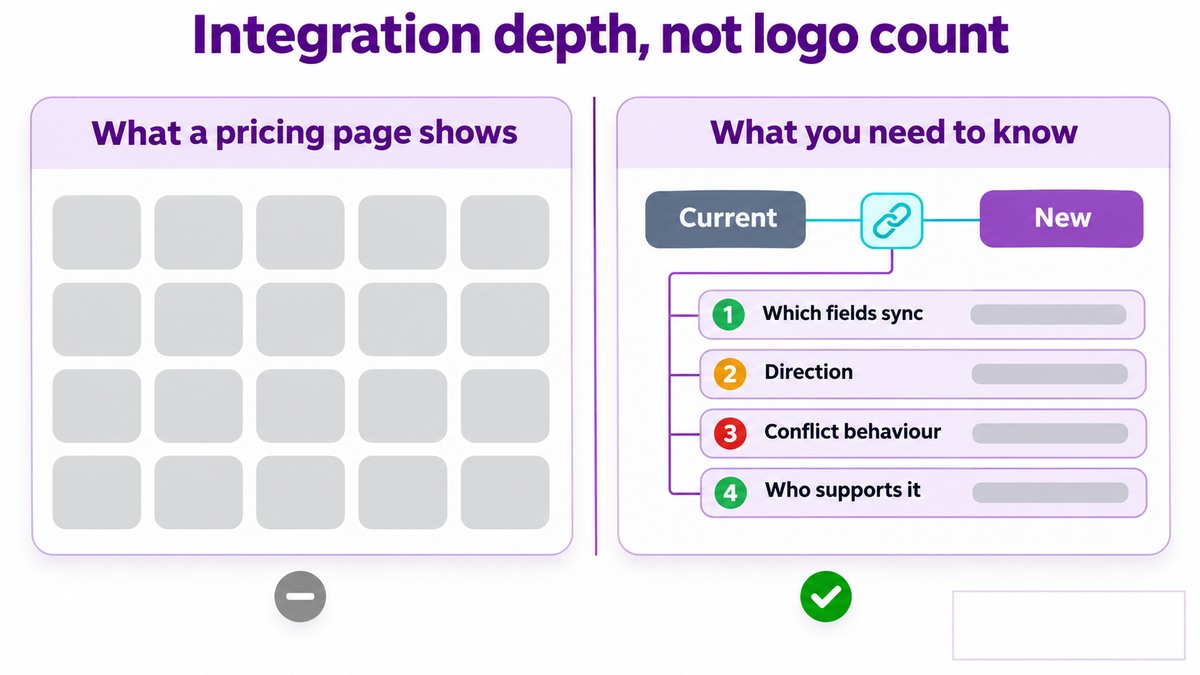
A long logo wall on a pricing page tells you a platform has heard of those products. It does not tell you what the connector does.
Which fields sync, specifically, and in which direction
What happens on a conflict, when both systems changed the same record
Whether it is real time or batched, and at what interval
Who supports it when it breaks, the platform or your CRM vendor
Ask those four about the two integrations you actually depend on, and ignore the rest of the logo wall. That is the only way to compare gallabox competitors on something meaningful.
The fourth question is the one that bites. A connector supported by neither party is one you maintain yourself.
Gallabox vs other WhatsApp platforms, the data model
This is the hidden work, and it has nothing to do with WhatsApp.
Platforms model contacts, conversations and custom fields differently. On gallabox vs other WhatsApp platforms, the messaging layer is identical because it is all Meta's Cloud API underneath. The difference is the shape of the record around it.
Custom fields may not map one to one. Some will have no equivalent
Tags and labels are modelled differently almost everywhere
Conversation assignment and team structures rarely match
Automation logic does not transfer. It is rebuilt, not imported
Ask any gallabox alternative for a field mapping document before you commit. A vendor who will produce one has thought about migrations; one who says "we will import your data" has not, and you will discover the gaps after the number has moved.
Alternative to gallabox india, in what order
Build the inventory and retire what nobody uses
Agree the field mapping, in writing, including the fields with no equivalent
Rebuild the two integrations you depend on and test them against the new platform
Rebuild automations, which is a rewrite rather than a transfer
Submit templates, because Meta's approval queue is on its own timeline
Migrate the number last, once everything above works
Any alternative to gallabox india that proposes migrating the number first is sequencing for their onboarding convenience rather than your continuity. The number is the irreversible step and it belongs at the end.
Run both in parallel if you can
If the platform allows a second number for testing, wire the integrations against that first. It costs a little and removes almost all of the cutover risk.
What no gallabox alternative fixes
A CRM that nobody keeps up to date. A new connector syncs the same bad data faster
Template rejections. Meta's decision, and it follows your number
Automations nobody can explain. Rebuild them deliberately or retire them
Unclear ownership. If nobody owned the old integrations, nobody will own the new ones
The last point is worth saying plainly. A migration is a good moment to assign owners, and a bad moment to discover there are none.
Common questions
Why is a gallabox alternative more work than a normal switch?
What should I do before I switch from gallabox?
How do I compare gallabox competitors on integrations?
Does my data transfer between platforms?
When should the number migrate?
Where Celitix fits
Celitix will produce a field mapping document before you commit, including the fields that have no equivalent, and will sequence the number move last.
Ask us the four connector questions about the two integrations you actually depend on, and ignore our logo wall too.
Ask Celitix for a field mapping document